
How to Build an Offshore Development Team Without Hiring Full-Time Developers
Introduction
Building a development team does not always mean hiring full-time developers.
For digital agencies and businesses serving international markets, an offshore development team can provide access to developers, designers, testers, and technical specialists without creating a large permanent workforce.
This model can be useful when development demand changes from project to project. Instead of hiring every specialist internally, businesses can build an external team around their actual requirements.
The key is to treat offshore development as a structured team rather than simply outsourcing individual tasks.
Start With Your Development Requirements
Before looking for developers, identify what your business actually needs.
A website project may require WordPress developers, frontend developers, UI/UX designers, QA specialists, or backend developers. A custom application may require a completely different combination of skills.
Start by defining:
- Technologies required
- Project duration
- Expected workload
- Required expertise
- Communication expectations
- Testing requirements
- Post-launch support
This makes it easier to build the right team instead of paying for skills you do not currently need.
Choose the Right Team Structure
An offshore team does not have to be large.
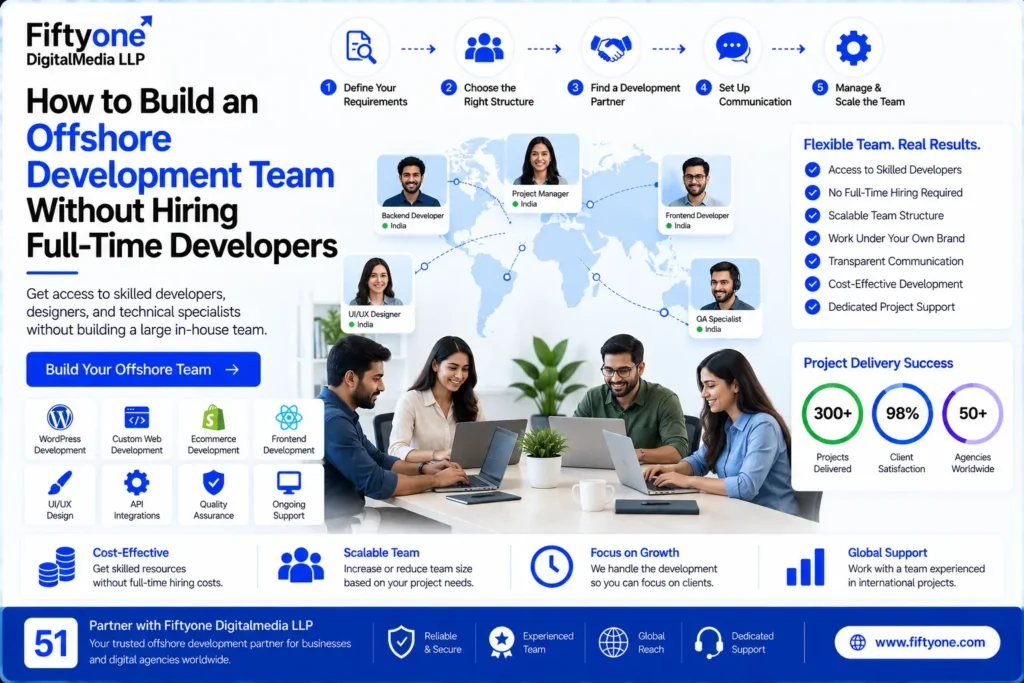
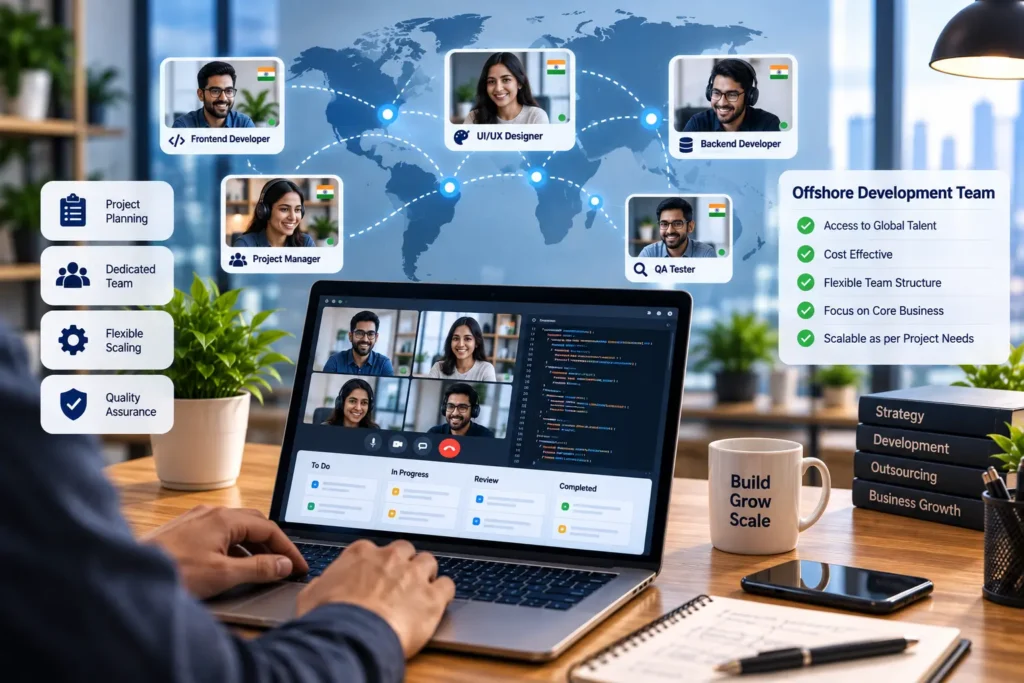
For some projects, one or two developers may be enough. Larger projects may require a developer, designer, QA specialist, and project manager working together.
The important thing is to match team structure with project complexity.
A digital agency can also maintain a small core team while bringing in additional specialists when a particular client project requires them. This creates flexibility without turning every temporary requirement into a permanent hiring decision.
Find a Development Partner
Once the requirements are clear, evaluate offshore development companies based on their technical experience and previous work.
Look beyond portfolios. Ask how the company manages communication, testing, documentation, deadlines, revisions, and post-launch support.
For agencies, it is particularly important to understand whether the development partner can work behind the agency’s brand and follow the agency’s existing processes.
If you are considering outsourcing development instead of building an internal team, our guide Outsource Website Development Without Hiring Developers explains how external development support can fit into an agency workflow.
Create a Clear Communication System
An offshore team needs a predictable communication process.
Decide who communicates with the developers, where tasks are recorded, how feedback is provided, and how progress is reported.
Project management platforms, documentation, regular meetings, and clear task descriptions can reduce misunderstandings.
Time-zone differences do not necessarily have to become a problem. A team can work across different regions when responsibilities and communication windows are clearly defined.
Give the Team Proper Documentation
Good documentation can make offshore collaboration much easier.
Provide project requirements, design files, technical specifications, brand guidelines, login procedures, coding standards, and acceptance criteria where relevant.
Instead of sending developers short messages such as “make this better,” explain what needs to change and what the completed result should look like.
Clear documentation reduces repeated questions and unnecessary revisions.
Manage Quality Before Launch
Quality assurance should be part of the development process rather than something added at the very end.
Test important functionality throughout development, including responsive layouts, forms, navigation, integrations, performance, and browser compatibility.
For ecommerce or application projects, testing should also cover user accounts, payments, dashboards, APIs, and other critical workflows.
This approach makes it easier to identify problems before they reach the final client or customer.
Scale the Team When Needed
One advantage of offshore development is that team size can change as project requirements change.
An agency may begin with a developer and later add a designer or QA specialist for a larger project. After the project is completed, the additional resources may no longer be necessary.
This allows businesses to build development capacity around actual demand instead of maintaining every role permanently.
For agencies looking to expand their technical capabilities, White Label Web Development Solutions for Marketing Agencies explains how external development support can complement existing agency services.
Keep Ownership and Responsibilities Clear
Before development begins, clarify who owns the source code, designs, documentation, accounts, and project assets.
Also define who is responsible for hosting, deployment, maintenance, security updates, backups, and future development.
Clear ownership prevents confusion when the project moves from development to ongoing maintenance.
Why Choose Fiftyone Digitalmedia LLP?
Fiftyone Digitalmedia LLP provides offshore web development support for businesses and agencies working with international clients.
Depending on project requirements, support can include WordPress development, frontend development, custom website development, ecommerce development, responsive design, integrations, testing, and ongoing maintenance.
The team structure can be adapted according to the project’s technical requirements instead of requiring the client to hire every role internally.
Frequently Asked Questions
Can I build an offshore development team without hiring employees?
Yes. Businesses can work with an offshore development company or external specialists and structure the team around specific project requirements.
What roles can an offshore development team include?
Depending on the project, a team can include developers, UI/UX designers, QA specialists, project managers, and technical specialists.
Is offshore development suitable for digital agencies?
Yes. Agencies can use offshore teams to increase development capacity while keeping client communication, branding, and project management under their own control.
How do I manage an offshore development team?
Use clear documentation, defined responsibilities, project management tools, regular communication, milestones, and a structured testing process.
Conclusion
Building an offshore development team does not require hiring a large number of full-time developers.
By defining your requirements, selecting the right specialists, establishing clear communication, documenting projects, and maintaining quality controls, you can create a flexible development team around your actual workload.
For international businesses and agencies, this approach can provide additional technical capacity while keeping the internal organization lean and adaptable.
CTA
Need an offshore development team for your next project? Contact Fiftyone Digitalmedia LLP to discuss your development requirements and build a team around your project needs.
