SEO Reporting Metrics Every Business Should Track Before Hiring an SEO Agency
Introduction
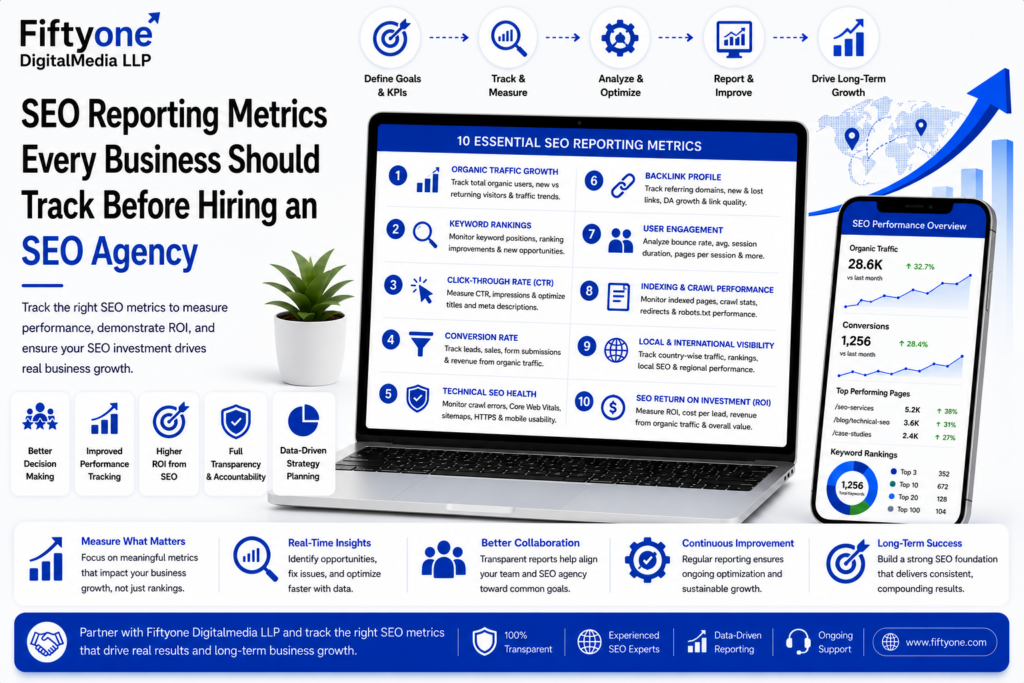
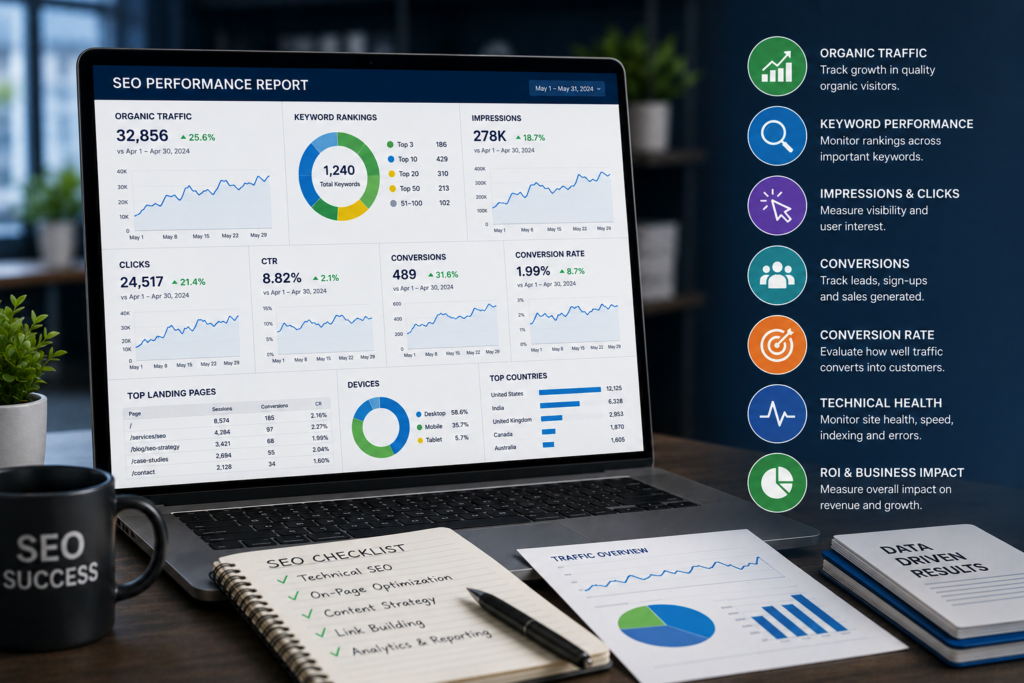
Hiring an SEO agency is a significant investment, but many businesses make the mistake of evaluating success based only on keyword rankings. While rankings are important, they represent just one part of an effective SEO strategy. A professional SEO campaign should be measured using multiple performance indicators that demonstrate improvements in visibility, traffic quality, user engagement, lead generation, and overall business growth. Understanding these metrics before partnering with an SEO agency helps businesses set realistic expectations and evaluate results more effectively.
SEO reporting provides transparency into how optimization efforts are contributing to long-term success. Rather than focusing on vanity metrics, businesses should monitor meaningful data that reflects real business outcomes. From organic traffic and keyword performance to conversions and technical website health, every metric offers valuable insights into campaign effectiveness. Fiftyone Digitalmedia LLP provides comprehensive SEO reporting that enables businesses to monitor progress, identify opportunities, and make informed marketing decisions through data-driven strategies.
Why SEO Reporting Matters
SEO reporting transforms raw data into actionable insights. It allows businesses to understand how their website is performing, which optimization strategies are working, and where improvements are required. Regular reporting also builds trust between businesses and their SEO agency by providing measurable evidence of campaign progress.
Benefits of SEO reporting include:
- Measuring return on investment
- Tracking organic growth
- Monitoring keyword visibility
- Identifying technical issues
- Improving marketing decisions
- Understanding user behavior
- Measuring lead generation
- Supporting long-term SEO planning
Businesses that review reports consistently are better positioned to maximize the value of their SEO investment.
Metric 1: Organic Traffic Growth
Organic traffic is one of the most important indicators of SEO success because it reflects how many users discover your website through unpaid search results. Rather than focusing on daily fluctuations, businesses should analyze monthly and quarterly growth trends to understand long-term performance.
A comprehensive organic traffic report should measure:
- Total organic users
- New visitors
- Returning visitors
- Traffic by landing page
- Traffic by country
- Device performance
- Seasonal trends
- Traffic growth percentage
Steady increases in qualified organic traffic often indicate that an SEO strategy is moving in the right direction.
Metric 2: Keyword Rankings
Keyword rankings remain an essential SEO metric, but they should be evaluated strategically rather than individually. Businesses should monitor groups of commercial, informational, and long-tail keywords to understand overall search visibility.
Important keyword data includes:
- Top-ranking keywords
- Ranking improvements
- Keyword distribution
- Featured snippets
- Local rankings
- International rankings
- Lost keywords
- New keyword opportunities
Businesses interested in expanding their search visibility can also explore International SEO Checklist for Businesses Expanding Beyond India, which explains how keyword strategies differ across international markets.
Metric 3: Organic Click-Through Rate (CTR)
High rankings do not always generate traffic. Organic click-through rate measures how often users click on your website after seeing it in search results. Improving titles, meta descriptions, and rich snippets often leads to better CTR without requiring higher rankings.
Key CTR metrics include:
- Average CTR
- Top-performing pages
- Low-performing impressions
- Search appearance
- Branded searches
- Non-branded searches
A growing CTR generally indicates that your search listings are becoming more attractive to potential visitors.
Metric 4: Conversion Rate from Organic Traffic
Traffic alone does not guarantee business success. Businesses should understand how many organic visitors complete valuable actions such as submitting inquiries, requesting quotes, downloading resources, or making purchases.
Useful conversion metrics include:
- Lead submissions
- Contact form completions
- Phone calls
- Quote requests
- Product purchases
- Newsletter subscriptions
- Revenue from organic traffic
- Conversion rate by landing page
Monitoring conversions helps businesses evaluate the true financial impact of their SEO investment.
Metric 5: Technical SEO Health Score
Even strong content cannot perform effectively if technical issues prevent search engines from crawling or indexing your website properly. Regular technical SEO reporting helps identify problems before they impact rankings.
Technical reports should monitor:
- Crawl errors
- Indexed pages
- Core Web Vitals
- Mobile usability
- Broken links
- XML sitemap status
- HTTPS security
- Structured data errors
Businesses looking to strengthen technical performance can also read Technical SEO Services Offered by Offshore SEO Teams, which explains how technical optimization improves long-term search visibility.
Metric 6: Backlink Profile and Domain Authority
Backlinks remain one of the strongest ranking factors because they signal trust and authority to search engines. However, businesses should look beyond the total number of backlinks and evaluate their quality, relevance, and diversity. A professional SEO agency should report how backlinks contribute to long-term organic growth rather than simply highlighting large numbers.
Important backlink metrics include:
- Total referring domains
- High-authority backlinks
- New backlinks acquired
- Lost backlinks
- Toxic backlinks
- Industry-relevant links
- Anchor text distribution
- Domain authority trends
A healthy backlink profile supports stronger rankings while reducing the risk of search engine penalties.
Metric 7: User Engagement Metrics
SEO success extends beyond attracting visitors. Businesses should understand how users interact with their website after arriving through organic search. Strong engagement signals often indicate that website content satisfies user intent and provides a positive browsing experience.
Key engagement metrics include:
- Average engagement time
- Bounce rate
- Pages per session
- Scroll depth
- Returning visitors
- Session duration
- Exit pages
- User journey analysis
Monitoring engagement helps businesses identify content improvements that can increase conversions and strengthen overall SEO performance.
Metric 8: Indexed Pages and Crawl Performance
Search engines must be able to crawl and index your website efficiently before pages can rank. Regular reporting should identify indexing issues, crawl errors, and technical obstacles that may limit search visibility.
Essential crawl metrics include:
- Indexed pages
- Crawled pages
- Crawl errors
- Redirect issues
- Canonical status
- Robots.txt performance
- XML sitemap coverage
- Duplicate content alerts
A technically healthy website provides a stronger foundation for sustainable SEO growth.
Metric 9: Local and International Visibility
Businesses serving multiple regions should measure search visibility across all target markets rather than focusing on overall rankings. International and local reporting helps determine whether optimization efforts are generating visibility where potential customers are searching.
Useful reporting includes:
- Country-wise traffic
- Local keyword rankings
- Google Business Profile performance
- Regional landing page performance
- International impressions
- Country-specific conversions
- Geographic traffic trends
- Local search visibility
Businesses planning international expansion can strengthen their strategy by reading How to Build a Successful Long-Term Offshore SEO Strategy, which explains how long-term SEO planning supports sustainable growth across global markets.
Metric 10: SEO Return on Investment (ROI)
Ultimately, every business wants to know whether its SEO investment is generating measurable business value. SEO ROI combines traffic, conversions, leads, and revenue to demonstrate the financial impact of ongoing optimization.
Common SEO ROI metrics include:
- Cost per lead
- Revenue from organic traffic
- Organic conversion value
- Lead growth percentage
- Customer acquisition cost
- Return on SEO investment
- Lifetime customer value
- Marketing efficiency
When businesses understand SEO ROI, they can make informed decisions about future marketing investments and agency partnerships.
How to Evaluate an SEO Agency’s Reports
Before hiring an SEO agency, ask to review sample reports and understand how campaign performance will be measured. A transparent agency should explain every metric, provide actionable recommendations, and connect SEO improvements to real business outcomes instead of presenting only ranking data.
Look for reporting that includes:
- Executive summary
- KPI dashboard
- Organic traffic analysis
- Keyword performance
- Technical SEO findings
- Conversion tracking
- Competitor insights
- Next month’s action plan
Clear, consistent reporting demonstrates accountability and helps businesses understand the value of ongoing SEO activities.
Why Choose Fiftyone Digitalmedia LLP
Choosing an SEO agency should be based on transparency, measurable performance, and long-term business results rather than promises of quick rankings. Fiftyone Digitalmedia LLP delivers comprehensive SEO reporting that focuses on meaningful business metrics, including organic traffic growth, keyword performance, technical optimization, conversions, and ROI. Our offshore SEO specialists provide detailed monthly reports, actionable insights, and continuous optimization strategies that help businesses make informed decisions while building sustainable organic growth.
FAQs
What are SEO reporting metrics?
SEO reporting metrics are measurable indicators used to evaluate the performance of an SEO campaign, including traffic, rankings, conversions, technical health, and overall business growth.
How often should SEO reports be reviewed?
Most businesses review SEO reports monthly, while larger organizations may monitor key performance indicators weekly to identify opportunities and resolve issues quickly.
Which SEO metric is the most important?
There is no single most important metric. Businesses should evaluate organic traffic, conversions, keyword rankings, technical health, and ROI together for a complete understanding of campaign performance.
Why should businesses track SEO ROI?
Tracking SEO ROI helps determine whether optimization efforts are generating qualified leads, revenue, and long-term business value, making it easier to justify marketing investments.
Can SEO reports help compare agencies?
Yes. Reviewing the depth, transparency, and business relevance of an agency’s reports helps businesses choose an SEO partner that focuses on measurable results instead of vanity metrics.
Conclusion
Understanding SEO reporting metrics before hiring an SEO agency allows businesses to make informed decisions and set realistic expectations. Rather than focusing solely on rankings, companies should evaluate organic traffic, technical performance, user engagement, backlinks, conversions, and return on investment to measure real business success. A transparent reporting framework provides valuable insights into campaign progress, highlights opportunities for improvement, and ensures that every SEO activity contributes toward long-term growth and measurable results.
Ready to Choose an SEO Agency That Prioritizes Results?
If you’re looking for an SEO partner that delivers transparent reporting and measurable business outcomes, Fiftyone Digitalmedia LLP is here to help. Our experienced offshore SEO specialists provide data-driven strategies, detailed performance reports, and continuous optimization designed to improve visibility, generate qualified leads, and maximize your return on investment. Contact our team today to build an SEO strategy backed by meaningful metrics and sustainable growth.