Offshore SEO for Ecommerce Websites: Proven Ranking Strategies
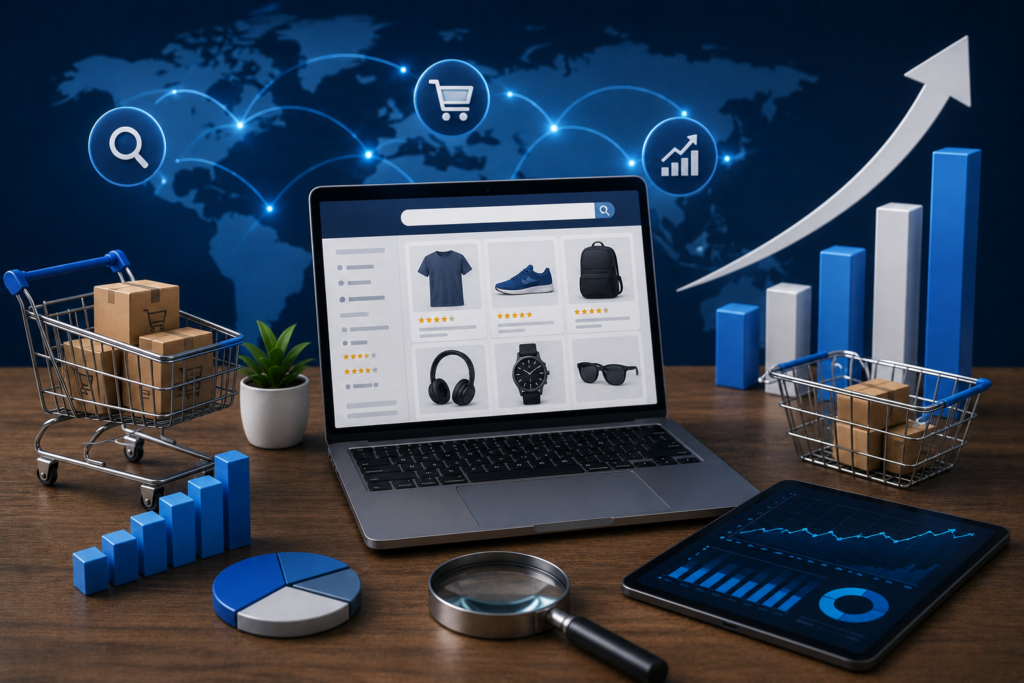
Building an ecommerce website is only the first step toward online success. The real challenge is attracting customers who are actively searching for your products. As competition increases across global marketplaces, relying only on paid advertising becomes expensive and unpredictable. Ecommerce businesses need a strategy that delivers consistent organic traffic and qualified buyers.
Offshore SEO helps ecommerce brands improve product visibility, strengthen category rankings, and generate long-term sales without depending entirely on paid campaigns. With the right offshore SEO partner, businesses can optimize thousands of product pages while building sustainable growth across international markets.
Fiftyone Digitalmedia LLP helps ecommerce businesses worldwide implement offshore SEO strategies that improve search rankings, increase qualified traffic, and support long-term revenue growth.
Why Ecommerce Businesses Choose Offshore SEO
Online stores often manage hundreds or thousands of products, making SEO a continuous process rather than a one-time project.
Every product page, category page, and collection requires optimization to remain competitive in search results.
Offshore SEO provides businesses with experienced specialists who continuously improve website performance while allowing internal teams to focus on operations, inventory, and customer service.
Instead of hiring an expensive in-house SEO department, businesses gain access to dedicated SEO expertise through a scalable offshore model.
The Foundation of Ecommerce SEO Success
Successful ecommerce SEO starts with a strong website structure.
Search engines should easily understand how products, categories, and collections relate to each other.
A well-organized ecommerce website improves crawlability while helping customers discover products more efficiently.
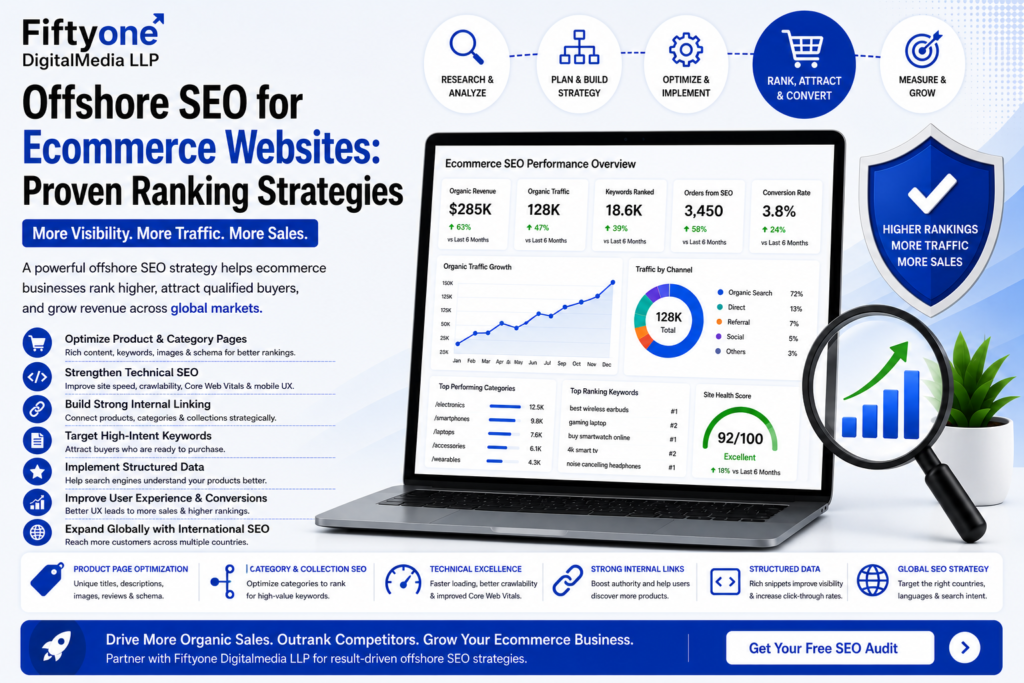
An effective offshore SEO strategy focuses on:
- Product page optimization
- Category page optimization
- Technical SEO
- Internal linking
- Keyword targeting
- Website speed
- Mobile experience
- Structured data implementation
These elements work together to improve visibility across search engines.
Optimize Product Pages for Search Intent
Many ecommerce stores publish manufacturer descriptions without considering customer search behavior.
Search engines prefer unique, informative content that helps users make purchasing decisions.
Every product page should include clear descriptions, relevant keywords, optimized images, and valuable information that answers customer questions.
Businesses targeting international markets should also optimize content for regional search intent instead of simply translating existing product pages.
Fiftyone Digitalmedia LLP creates ecommerce SEO strategies that improve both search visibility and user experience across global markets.
Technical SEO Drives Ecommerce Performance
Large ecommerce websites often experience technical issues that limit rankings.
Common problems include duplicate pages, crawl inefficiencies, broken links, slow loading times, and poor mobile performance.
Regular technical optimization helps search engines crawl product pages more efficiently while improving the shopping experience for customers.
Businesses investing in technical SEO usually experience stronger long-term organic performance because their websites remain healthy as product catalogs continue expanding.
A Business Scenario
Imagine an online electronics retailer selling products across the United States, Canada, Australia, and the United Kingdom.
Although the business regularly launches new products, organic sales remain limited because category pages are poorly optimized, product descriptions are duplicated, and website speed continues declining as the catalog grows.
The business partners with an offshore SEO team.
Technical issues are resolved, category pages are restructured, product content is optimized, and internal linking is strengthened.
Within several months, product pages begin ranking for more commercial keywords, qualified traffic increases across multiple countries, and organic revenue grows without increasing advertising costs.
The business succeeds because SEO becomes an ongoing growth strategy rather than a one-time project.
Mistakes That Prevent Ecommerce Growth
Many ecommerce businesses unknowingly limit their rankings by overlooking important SEO fundamentals.
Common mistakes include:
- Duplicate product descriptions
- Weak category page optimization
- Poor website navigation
- Slow page speed
- Missing structured data
- Broken internal links
- Ignoring mobile optimization
- Publishing thin product content
Correcting these issues creates a stronger foundation for sustainable organic growth.
Build an SEO Strategy That Grows With Your Store
As ecommerce businesses expand, SEO becomes increasingly complex.
New products, changing customer behavior, and growing competition require continuous optimization rather than occasional updates.
Businesses that invest in long-term offshore SEO gain a competitive advantage by continuously improving visibility while adapting to market changes.
Companies looking to strengthen their ecommerce SEO strategy can also explore:
Ecommerce SEO Guide for Shopify, WooCommerce & Magento Stores
This guide explains how businesses can optimize ecommerce platforms to improve rankings, attract qualified buyers, and increase long-term organic sales.
FAQs
1. What is offshore SEO for ecommerce websites?
Offshore SEO helps ecommerce websites improve product rankings, attract qualified buyers, and increase long-term organic sales.
2. Why is SEO important for ecommerce businesses?
SEO improves product visibility, drives targeted organic traffic, and reduces reliance on paid advertising for sales.
3. What does an ecommerce SEO strategy include?
An ecommerce SEO strategy includes product page optimization, category SEO, technical SEO, keyword research, and structured data.
4. How long does ecommerce SEO take to show results?
Most ecommerce websites start seeing measurable SEO improvements within 3–6 months with consistent optimization.
5. Why choose Fiftyone Digitalmedia LLP for ecommerce SEO?
Fiftyone Digitalmedia LLP provides data-driven offshore SEO solutions that increase ecommerce rankings, qualified traffic, and long-term revenue growth.
Conclusion
Offshore SEO helps ecommerce businesses build sustainable organic growth by improving technical performance, optimizing product and category pages, and creating better shopping experiences for customers. Instead of relying entirely on paid advertising, businesses develop a long-term strategy that continues generating qualified traffic and sales.
Whether selling locally or expanding internationally, a structured offshore SEO strategy provides the foundation needed for consistent ecommerce success. Fiftyone Digitalmedia LLP helps ecommerce businesses implement scalable SEO solutions that improve rankings, increase organic revenue, and support long-term business growth.