Best CMS for Business Websites in 2026
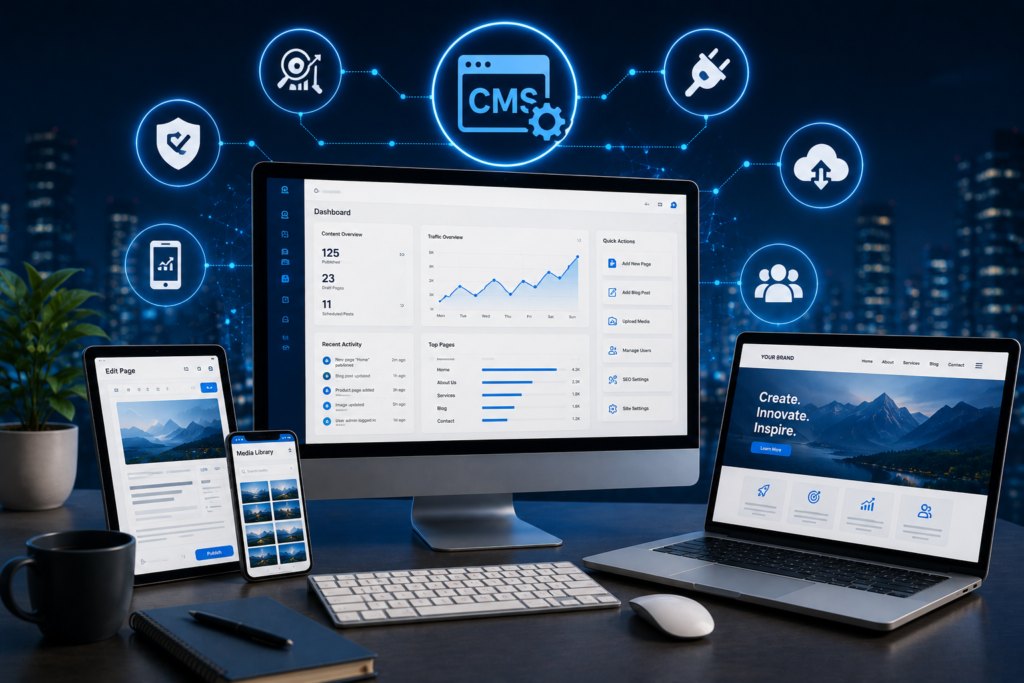
A CMS is no longer just a tool for editing website pages. In 2026, businesses need platforms capable of handling SEO, content workflows, mobile responsiveness, automation, integrations, and scalable digital operations without performance issues.
Many businesses choose the wrong CMS based only on design or short-term pricing. Later they face:
slow website performance, plugin conflicts, SEO limitations, poor scalability, and expensive rebuild requirements.
Choosing the right CMS directly affects:
website speed, content management efficiency, customer experience, and long-term digital growth. Fiftyone Digitalmedia LLP helps businesses choose scalable CMS platforms optimized for modern digital performance and future-ready website management.
Features Businesses Need in a Modern CMS
- SEO-friendly architecture
- Mobile responsiveness
- Easy content management
- Scalable infrastructure
- Fast-loading performance
- API integration capability
- Ecommerce compatibility
- Better security systems
Businesses Need More Than Basic Website Builders
Modern companies require websites capable of supporting:
content marketing, lead generation, ecommerce operations, automation systems, analytics tools, and scalable digital workflows.
Basic website builders often create limitations when businesses start growing because they struggle with:
customization flexibility, advanced integrations, technical SEO, and scalable backend management.
A modern CMS should help businesses:
manage content efficiently, improve search visibility, and scale digital operations without technical complexity.
Businesses planning scalable digital platforms should also read
Why Businesses Need Professional Website Development
Fiftyone Digitalmedia LLP develops scalable CMS systems optimized for SEO performance, usability, and long-term business growth.
WordPress Continues Leading Business CMS Usage
WordPress remains one of the most widely used CMS platforms because it provides:
strong flexibility, SEO compatibility, plugin ecosystems, and scalable content management.
It works especially well for:
- Business websites
- Blogs
- Agency websites
- Service businesses
- SEO-focused platforms
- Content-heavy websites
One of the biggest advantages of WordPress is content scalability. Businesses can:
expand pages, publish blogs, optimize SEO, and integrate marketing systems without rebuilding entire websites repeatedly.
Headless CMS Platforms Are Growing Rapidly
Traditional CMS platforms combine frontend and backend systems together.
Headless CMS separates content management from frontend presentation, allowing businesses to:
- improve frontend speed
- create omnichannel experiences
- integrate mobile apps
- scale APIs efficiently
- use modern frontend frameworks
- improve application flexibility
This architecture is becoming increasingly popular among:
enterprise businesses, SaaS platforms, high-traffic websites, and modern digital products.
Businesses building modern frontend systems should also explore
React JS Development Company in India
Fiftyone Digitalmedia LLP helps businesses build scalable CMS ecosystems integrated with modern frontend technologies and advanced digital experiences.
Common CMS Mistakes Businesses Make
- Choosing based only on low pricing
- Ignoring scalability requirements
- Using too many plugins
- Weak SEO structure
- Poor mobile optimization
- Selecting weak hosting systems
- Prioritizing design over performance
- Avoiding professional development support
These mistakes often create expensive technical problems later.
Best CMS Platforms for Different Business Types
WordPress
Best for:
- SEO websites
- blogs
- agencies
- service businesses
- flexible content management
Shopify
Best for:
- ecommerce stores
- online retail businesses
- D2C brands
- product-based companies
Webflow
Best for:
- visually modern websites
- creative businesses
- lightweight websites
- landing pages
Headless CMS
Best for:
- enterprise applications
- SaaS platforms
- API-driven systems
- omnichannel content management
SEO and Website Performance Depend on CMS Quality
A poorly optimized CMS often creates:
slow loading speed, indexing issues, duplicate content problems, poor mobile experience, and weak technical SEO performance.
Modern CMS systems should support:
- structured content
- clean URLs
- responsive layouts
- optimized caching
- schema markup
- lightweight frontend delivery
Businesses using SEO-friendly CMS systems usually achieve:
better rankings, stronger organic traffic, and easier long-term content scalability.
Fiftyone Digitalmedia LLP helps businesses develop SEO-focused CMS ecosystems optimized for performance, scalability, and modern digital growth.
Frequently Asked Questions
1. Which CMS is best for business websites in 2026?
WordPress remains one of the best CMS platforms for most business websites due to its flexibility, SEO features, and scalability.
2. Is WordPress better than Shopify?
WordPress is ideal for content-driven and service websites, while Shopify is better for ecommerce businesses and online stores.
3. What is a headless CMS?
A headless CMS separates content management from the frontend, making it ideal for enterprise websites, SaaS platforms, and API-driven applications.
4. Why is choosing the right CMS important for SEO?
The right CMS improves website speed, technical SEO, mobile responsiveness, and content management, helping businesses achieve better search rankings.
5. Why choose Fiftyone Digitalmedia LLP for CMS development?
Fiftyone Digitalmedia LLP builds SEO-friendly, scalable CMS websites using WordPress, Shopify, and modern headless CMS solutions for long-term business growth.
Conclusion
The best CMS for business websites in 2026 depends heavily on:
business goals, scalability requirements, content strategy, frontend flexibility, and future digital expansion plans.
WordPress remains highly effective for flexible business websites, Shopify continues dominating ecommerce growth, and headless CMS systems are rapidly expanding for enterprise-level scalability.
Businesses choosing the right CMS today create stronger foundations for SEO, performance, customer experience, and long-term digital success. Fiftyone Digitalmedia LLP helps businesses choose scalable CMS solutions optimized for modern website growth and digital performance.