Essential Features of Successful E-commerce Websites in 2026
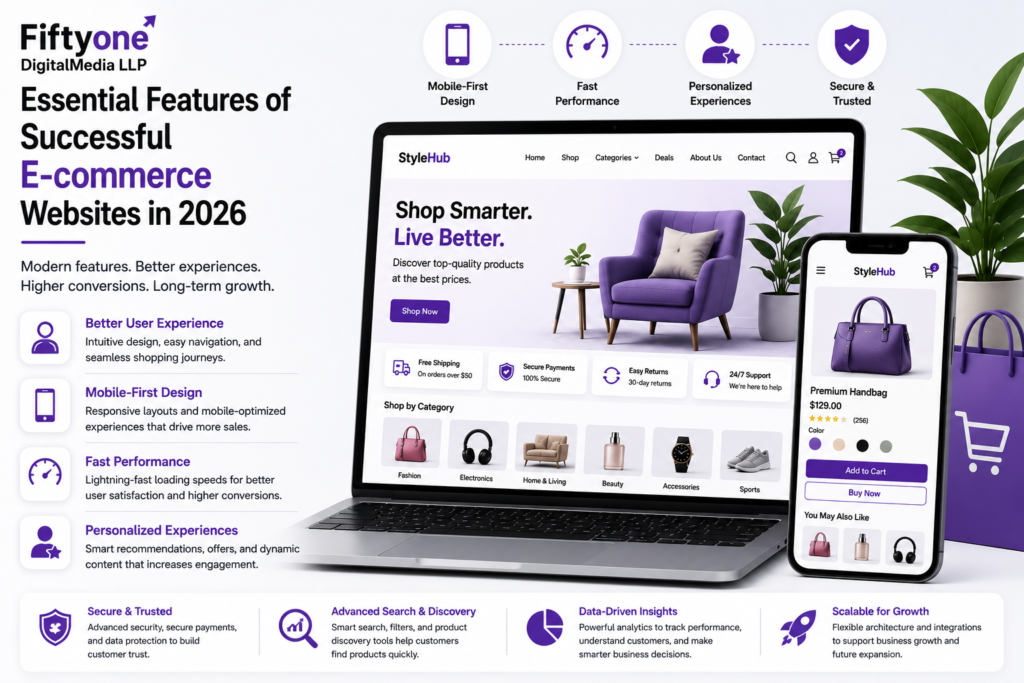
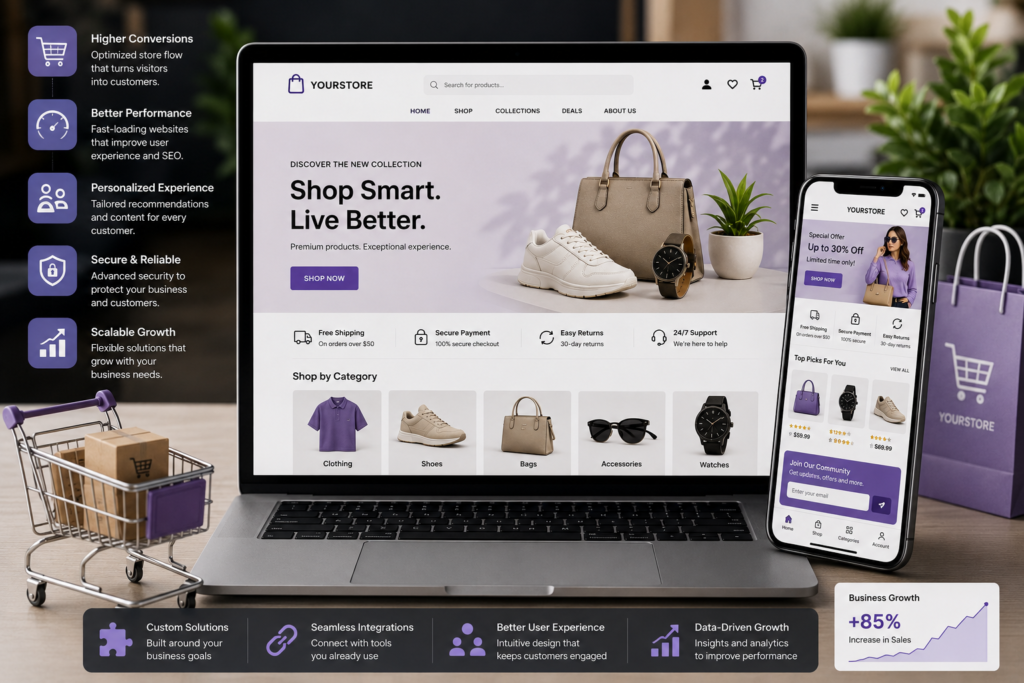
The ecommerce industry continues to evolve as customer expectations, technology, and online shopping behavior change. In 2026, having products and competitive pricing alone is not enough. Successful ecommerce websites must provide seamless user experiences, fast performance, personalization, and convenience at every stage of the customer journey.
Businesses that invest in the right website features are more likely to attract customers, improve conversions, and build long-term brand loyalty. Fiftyone Digitalmedia LLP helps ecommerce brands develop modern online stores designed to meet the demands of today’s digital consumers.
User Experience Remains the Foundation of Ecommerce Success
Customers expect websites that are easy to navigate and simple to use.
A successful ecommerce website should help users:
- Find products quickly
- Navigate categories easily
- Access important information
- Complete purchases without confusion
When customers can shop without friction, they are more likely to convert and return in the future.
Mobile-First Design Is No Longer Optional
Mobile shopping continues to dominate online commerce.
Successful ecommerce websites in 2026 focus heavily on:
- Responsive layouts
- Fast mobile loading speeds
- Touch-friendly navigation
- Mobile-optimized checkout
- Easy product browsing
A poor mobile experience can significantly reduce sales opportunities.
Fiftyone Digitalmedia LLP develops ecommerce websites with mobile-first strategies that improve usability across all devices.
Fast Website Performance Directly Affects Revenue
Online shoppers expect websites to load instantly.
Slow websites often experience:
- Higher bounce rates
- Lower conversions
- Reduced customer satisfaction
- Poor search visibility
Performance optimization includes:
- Faster page loading
- Optimized images
- Efficient code structure
- Improved server performance
- Reduced unnecessary scripts
A faster website creates a better shopping experience and supports business growth.
Personalization Improves Customer Engagement
Customers increasingly expect shopping experiences tailored to their interests.
Modern ecommerce websites use personalization features such as:
- Product recommendations
- Personalized promotions
- Recently viewed products
- Customer-specific offers
- Dynamic content
These features help businesses increase customer engagement and average order values.
Simplified Checkout Processes Increase Conversions
A complicated checkout process remains one of the biggest causes of cart abandonment.
Successful ecommerce websites focus on:
- Fewer checkout steps
- Guest checkout options
- Multiple payment methods
- Auto-filled customer information
- Mobile-friendly payment experiences
Small improvements in checkout design can produce significant revenue gains.
Businesses planning advanced ecommerce solutions should also explore:
Why Businesses Invest in Custom E-commerce Website Development
Custom development allows businesses to build unique shopping experiences and features tailored to their customers and growth goals.
Advanced Search and Product Discovery Features
Customers expect to find products quickly.
Important search features include:
- Smart search suggestions
- Product filters
- Category navigation
- Sorting options
- Visual product discovery
The easier it is for customers to find products, the more likely they are to complete purchases.
Trust and Security Influence Buying Decisions
Customers are cautious when sharing payment information online.
Successful ecommerce websites build trust through:
- Secure payment processing
- SSL protection
- Transparent policies
- Customer reviews
- Clear contact information
Trust signals reduce purchase hesitation and improve conversion rates.
Fiftyone Digitalmedia LLP helps businesses create secure ecommerce environments that strengthen customer confidence and support long-term growth.
Data and Analytics Drive Continuous Improvement
The most successful ecommerce businesses make decisions based on data rather than assumptions.
Important metrics include:
- Conversion rates
- Customer behavior
- Product performance
- Cart abandonment
- Revenue trends
Analytics help businesses identify growth opportunities and improve website performance over time.
Frequently Asked Questions
1. What are the essential features of a successful ecommerce website in 2026?
Fast performance, mobile-first design, secure checkout, easy navigation, personalization, and SEO-friendly architecture.
2. Why is mobile optimization important for ecommerce websites?
Most online shoppers use mobile devices, making responsive design and fast mobile performance essential for higher conversions.
3. How does website speed affect ecommerce sales?
A faster website improves user experience, reduces bounce rates, increases conversions, and supports better search engine rankings.
4. Why should businesses invest in custom ecommerce website development?
Custom development provides better scalability, unique features, improved user experience, and flexibility to support long-term business growth.
5. Why choose Fiftyone Digitalmedia LLP for ecommerce website development?
Fiftyone Digitalmedia LLP builds secure, high-performance, and scalable ecommerce websites optimized for conversions, user experience, and business growth.
Conclusion
Successful ecommerce websites in 2026 combine exceptional user experiences, fast performance, mobile optimization, personalization, security, and data-driven decision-making. Businesses that invest in these essential features are better positioned to attract customers, increase conversions, and build sustainable online growth.
As ecommerce competition continues to increase, focusing on customer needs and modern website functionality becomes a critical factor in long-term success. Fiftyone Digitalmedia LLP helps businesses develop high-performing ecommerce websites built for growth, scalability, and customer satisfaction.