International SEO Checklist for Businesses Expanding Beyond India
Introduction
Expanding beyond India opens exciting opportunities for businesses looking to reach international customers, but success depends on more than simply launching a website in new markets. Every country has different search behaviors, languages, competition levels, and search engine expectations. Without a structured international SEO strategy, businesses may struggle to achieve visibility, attract qualified visitors, or compete effectively against established global brands.
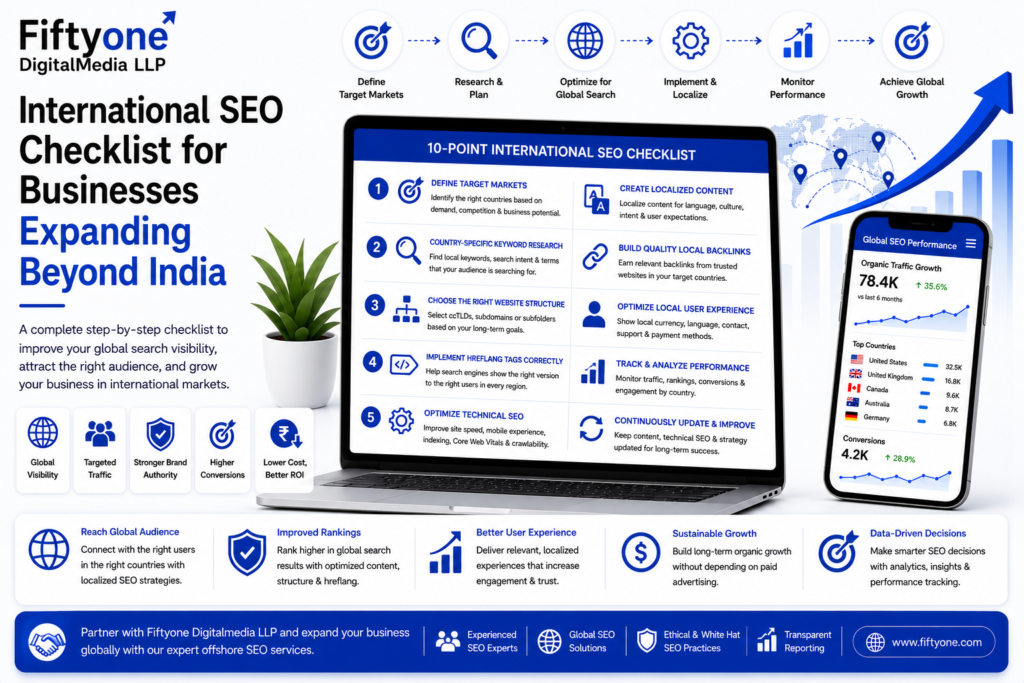
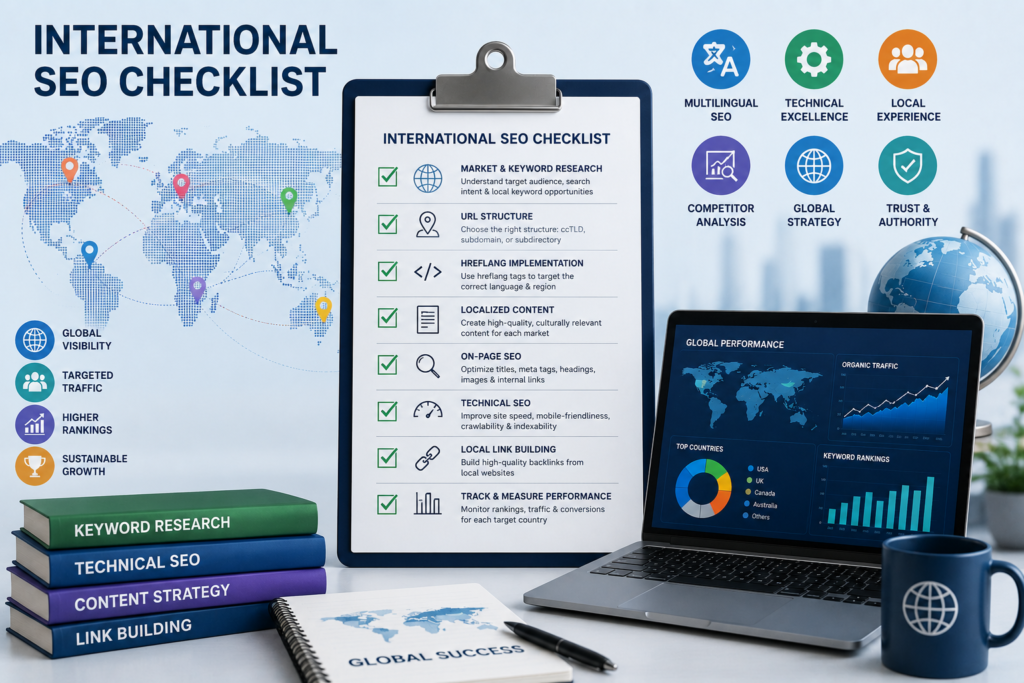
An International SEO Checklist provides a step-by-step framework for optimizing websites for multiple countries and regions. From technical SEO and multilingual content to hreflang implementation and localized keyword research, every element contributes to better search performance across international markets. Businesses that invest in a structured SEO approach can build stronger global visibility while avoiding common expansion mistakes.
Fiftyone Digitalmedia LLP helps organizations implement scalable international SEO strategies that support sustainable growth across multiple countries. Following a comprehensive checklist ensures your website remains optimized as your business expands into new global markets.
Why International SEO Matters
International SEO helps search engines understand which countries and languages your website targets. Instead of serving identical content to every visitor, international optimization ensures users receive the most relevant pages based on their location and language preferences.
Benefits of international SEO include:
- Increased global search visibility
- Better country-specific rankings
- Higher organic traffic
- Improved user experience
- Stronger international brand authority
- Better conversion rates
- Reduced duplicate content issues
- Sustainable global business growth
Businesses expanding internationally should view SEO as an essential part of their long-term digital growth strategy rather than a one-time optimization project.
Checklist 1: Define Your Target Markets
Successful international SEO begins with selecting the right countries instead of targeting every market simultaneously. Businesses should evaluate demand, competition, customer behavior, and business opportunities before expanding.
Important factors include:
- Market demand
- Search volume
- Local competitors
- Customer demographics
- Purchasing behavior
- Language preferences
- Legal requirements
- Growth potential
Focusing on a few high-potential markets first allows businesses to build authority before expanding further.
Checklist 2: Perform Country-Specific Keyword Research
Keywords that perform well in India may not generate the same results in the United States, United Kingdom, Australia, Canada, or Europe. Local search behavior differs significantly across regions.
Effective international keyword research includes:
- Country-specific search terms
- Local spelling variations
- Regional terminology
- Commercial keywords
- Long-tail keywords
- Informational searches
- Competitor keyword analysis
- Search intent evaluation
An offshore SEO team ensures keyword strategies align with the language and search behavior of each target country.
Checklist 3: Choose the Right Website Structure
Website architecture directly affects international SEO performance. Search engines need clear signals about which content belongs to each country or language.
Common international structures include:
- Country-specific domains (ccTLDs)
- Subdomains
- Subdirectories
- Language folders
- Regional landing pages
Each option has advantages depending on budget, branding, and long-term expansion plans. Businesses should select a structure that supports future scalability.
Checklist 4: Implement Hreflang Tags Correctly
Hreflang tags tell search engines which version of a webpage should appear for users in different countries or languages. Proper implementation prevents duplicate content issues while improving international search visibility.
Best practices include:
- Accurate language codes
- Country targeting
- Self-referencing hreflang
- Return tags
- Consistent implementation
- XML sitemap support
- Error monitoring
- Regular validation
Correct hreflang implementation significantly improves the user experience for international audiences.
Checklist 5: Optimize Technical SEO for Global Websites
International websites require strong technical foundations to ensure search engines can crawl and index all regional pages effectively. Technical SEO becomes increasingly important as websites expand into multiple markets.
Key optimization areas include:
- Website speed
- Mobile responsiveness
- XML sitemaps
- HTTPS security
- Canonical tags
- Crawl optimization
- Structured data
- Core Web Vitals
Businesses can strengthen their technical foundation by exploring Technical SEO Services Offered by Offshore SEO Teams, which explains how offshore specialists improve website performance for global search visibility.
Checklist 6: Create Localized Content Instead of Direct Translation
Simply translating website content rarely delivers strong international SEO results. Successful businesses localize their messaging to match regional culture, customer expectations, and search intent.
Localized content should consider:
- Regional vocabulary
- Currency
- Date formats
- Local examples
- Customer pain points
- Cultural preferences
- Country-specific regulations
- Local search behavior
Localized content builds trust while improving engagement and conversion rates across international markets.
Checklist 7: Build High-Quality Country-Specific Backlinks
Backlinks remain one of the strongest ranking signals in international SEO, but relevance matters more than volume. Links from websites within your target country help search engines understand your regional authority and improve local search performance. A long-term strategy should focus on earning natural backlinks from trusted publications, business directories, industry websites, and local partners rather than relying on low-quality link-building techniques.
Some effective international link-building methods include:
- Guest posting on regional websites
- Local business directory submissions
- Digital PR campaigns
- Industry partnerships
- Country-specific resource pages
- Local influencer collaborations
- Original research and reports
- High-quality shareable content
A diversified backlink profile improves domain authority while strengthening your visibility across multiple international markets.
Checklist 8: Optimize for Local User Experience
Ranking well is only part of international SEO. Visitors should also enjoy a smooth browsing experience once they land on your website. A localized user experience increases engagement, reduces bounce rates, and improves conversion opportunities.
Businesses should optimize:
- Currency display
- Contact information
- Local phone numbers
- Time zones
- Shipping information
- Payment methods
- Navigation language
- Customer support availability
Small localization improvements can significantly increase trust among international customers and encourage higher conversion rates.
Checklist 9: Track International SEO Performance
Measuring SEO performance across different countries helps businesses understand which markets are growing and where further optimization is required. Rather than relying on overall website traffic, monitor country-specific performance indicators to make informed business decisions.
Key metrics include:
- Organic traffic by country
- Keyword rankings
- Click-through rate (CTR)
- Conversion rate
- Bounce rate
- Average engagement time
- Indexed international pages
- Revenue generated from organic search
Regular reporting enables businesses to identify opportunities for expansion while continuously improving their international SEO strategy.
Checklist 10: Continuously Update and Improve Your Strategy
International SEO is an ongoing process rather than a one-time project. Search trends, customer expectations, and competitor strategies evolve regularly, making continuous optimization essential for maintaining global visibility.
Long-term improvement activities include:
- Updating outdated content
- Expanding keyword coverage
- Monitoring competitors
- Improving website performance
- Refreshing localized landing pages
- Auditing technical SEO
- Strengthening backlink profiles
- Testing conversion improvements
Businesses that invest in continuous optimization remain competitive as international search markets continue to evolve.
Why Choose Fiftyone Digitalmedia LLP
Expanding into international markets requires more than translating a website. It demands a comprehensive SEO strategy that combines technical optimization, localized content, strategic keyword research, and continuous performance monitoring. Fiftyone Digitalmedia LLP helps businesses implement scalable international SEO solutions designed to improve visibility across multiple countries and languages.
Our offshore SEO specialists create customized strategies that align with your business goals while ensuring your website meets international search engine best practices. Whether you’re entering one new market or expanding globally, we help build a sustainable foundation for long-term organic growth.
FAQs
1. What is international SEO?
International SEO is the process of optimizing a website so search engines can identify the countries and languages it targets, helping improve visibility in global search results.
2. How is international SEO different from local SEO?
Local SEO focuses on attracting customers within a specific geographic area, while international SEO targets users across multiple countries or languages.
3. Why are hreflang tags important?
Hreflang tags help search engines display the correct language or regional version of a webpage, reducing duplicate content issues and improving user experience.
4. Should I translate or localize my content?
Localization is generally more effective because it adapts content to regional language, culture, and customer expectations instead of simply translating text.
5. How long does international SEO take to show results?
Most businesses begin seeing measurable improvements within three to six months, while stronger international visibility typically develops over six to twelve months through consistent optimization.
Conclusion
Expanding beyond India presents significant growth opportunities, but achieving long-term success requires a structured international SEO strategy. By following a comprehensive checklist that includes technical SEO, localized content, country-specific keyword research, hreflang implementation, and ongoing performance analysis, businesses can improve global search visibility and attract qualified international customers. A well-executed international SEO plan not only strengthens rankings across multiple markets but also builds long-term brand authority and sustainable organic growth.
Ready to Expand Your Business Globally?
If you’re planning to reach customers beyond India, Fiftyone Digitalmedia LLP can help you build a scalable international SEO strategy tailored to your target markets. From technical optimization and multilingual SEO to localized content and performance tracking, our offshore SEO experts provide end-to-end solutions that support sustainable international growth. Contact us today to start expanding your online presence across global markets.