International SEO Strategy for Multi-Country Websites
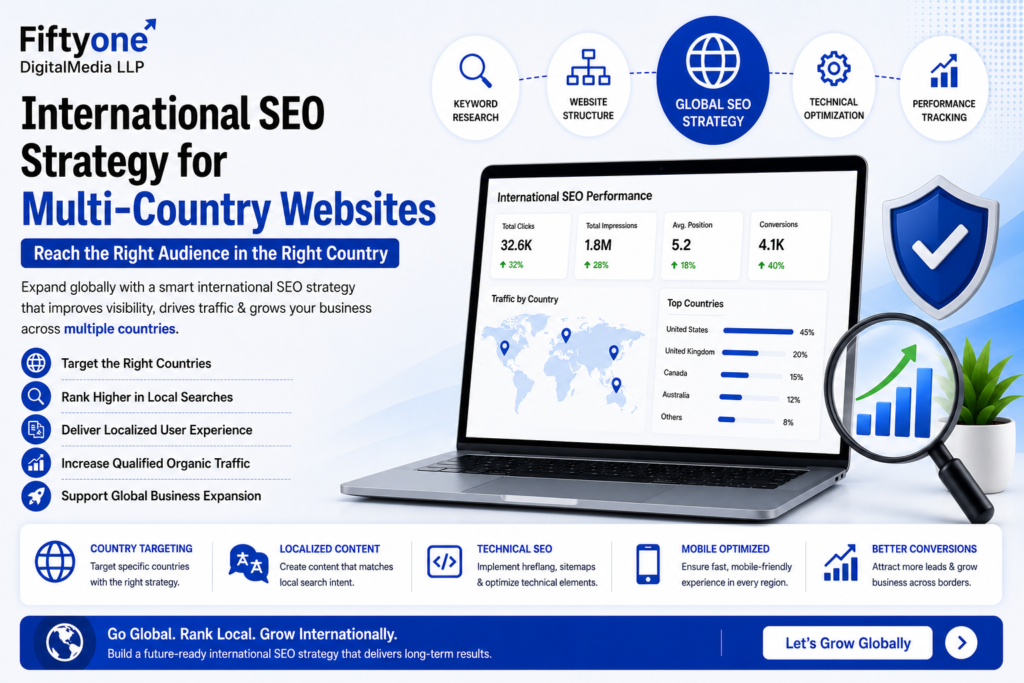

Expanding into international markets requires more than translating website content or launching country-specific pages. Businesses targeting customers in multiple countries must ensure their websites are structured in a way that helps search engines understand which pages should appear for users in different regions.
Without a clear international SEO strategy, businesses often experience duplicate content issues, incorrect search visibility, and missed opportunities in global markets. A well-planned approach helps companies reach the right audience, improve organic traffic, and generate qualified leads across multiple countries.
Fiftyone Digitalmedia LLP helps businesses build international SEO strategies that improve global search visibility while supporting long-term business growth.
What Is International SEO?
International SEO is the process of optimizing a website so search engines can identify the countries and audiences your business wants to target.
Instead of creating one website for every market without direction, businesses develop a structured SEO strategy that aligns website architecture, content, and technical optimization with specific geographic regions.
The objective is simple: show the right content to the right users in the right country.
Why Multi-Country Websites Need a Strategy
Many businesses launch separate country pages but overlook the technical and content planning required to make them successful.
Without a proper strategy, websites may compete against their own pages in search results, confuse search engines, and dilute overall authority.
A successful international SEO strategy helps businesses:
- Reach customers in multiple countries
- Improve regional keyword rankings
- Deliver localized user experiences
- Increase qualified organic traffic
- Strengthen global brand visibility
- Support international business expansion
Businesses that plan their international SEO from the beginning usually achieve stronger long-term results than those making changes after expansion.
Build Website Architecture for Global Growth
Website structure plays a major role in international SEO.
Businesses should decide whether country-specific content will be organized through subdirectories, subdomains, or separate domains based on long-term growth plans.
A well-structured website allows search engines to understand relationships between regional pages while making navigation easier for users.
Every country page should provide localized information rather than simply copying content from another market.
Localized Content Performs Better Than Generic Content
One of the biggest mistakes businesses make is publishing identical content across multiple country pages.
Although products or services may remain the same, customer expectations, search behavior, and terminology often vary between countries.
Localized content should reflect:
- Regional search intent
- Local spelling and terminology
- Currency and pricing
- Country-specific business information
- Market-focused messaging
Creating valuable localized content improves both user experience and search engine relevance.
Fiftyone Digitalmedia LLP develops SEO content strategies that help businesses connect with audiences across international markets while maintaining strong search visibility.
Technical SEO Supports International Rankings
International SEO depends heavily on technical implementation.
Businesses should regularly review important technical areas such as:
- Hreflang implementation
- XML sitemaps
- Country-specific URLs
- Mobile optimization
- Website speed
- Internal linking
- Structured data
- Crawlability
Technical optimization ensures search engines correctly understand regional pages and display the appropriate version to users.
A Business Scenario
Imagine an IT services company expanding from India into the United States, Canada, and Australia.
Initially, every country page contains identical content with only the country name changed. Search engines struggle to determine which page should rank, causing inconsistent visibility across all regions.
The business then develops a proper international SEO strategy. Country-specific landing pages are created with localized messaging, technical SEO is improved, website structure is optimized, and regional keyword targeting is implemented.
Over time, each country page begins attracting qualified traffic from its intended market, resulting in better rankings, improved user engagement, and increased international enquiries.
The improvement comes from strategic planning rather than simply adding more pages.
Common International SEO Mistakes
Many businesses lose valuable search visibility because of avoidable mistakes.
Common issues include:
- Publishing duplicate country pages
- Ignoring localized keyword research
- Poor website architecture
- Missing hreflang implementation
- Weak internal linking
- Slow website performance
- Generic international content
- Neglecting technical SEO audits
Avoiding these mistakes creates a stronger foundation for global organic growth.
Businesses planning international expansion can also explore:
How Offshore SEO Services Help Businesses Expand into International Markets
This guide explains how experienced offshore SEO teams help businesses improve global visibility, attract international customers, and scale organic growth efficiently.
FAQs
1. What is international SEO?
International SEO optimizes a website to improve search visibility and reach customers across multiple countries and regions.
2. Why is international SEO important for multi-country websites?
International SEO helps businesses target regional audiences, improve global rankings, and generate qualified international traffic.
3. What should an international SEO strategy include?
An effective strategy includes localized content, hreflang tags, technical SEO, country-specific keyword research, and optimized website structure.
4. How long does international SEO take to show results?
Most businesses see measurable international SEO improvements within 3–6 months with consistent optimization and localized content.
5. Why choose Fiftyone Digitalmedia LLP for international SEO?
Fiftyone Digitalmedia LLP delivers customized international SEO strategies that improve global visibility, qualified leads, and sustainable business growth.
Conclusion
An effective international SEO strategy helps businesses reach customers across multiple countries while providing search engines with the clarity needed to rank regional content accurately. Success depends on more than translation. It requires strategic website architecture, localized content, technical optimization, and continuous performance improvements.
Businesses that invest in international SEO position themselves for sustainable global growth, stronger search visibility, and higher-quality organic traffic. Fiftyone Digitalmedia LLP helps businesses achieve these goals through customized international SEO strategies designed for long-term success.