Offshore SEO for Global Businesses: Benefits, Process, and ROI

Introduction
Global businesses need more than a website to compete in international search results. They need consistent keyword research, technical optimization, relevant content, competitor analysis, authority development, and performance tracking across the markets they want to reach.
Building all of these capabilities internally can become expensive as SEO requirements grow. A company targeting the USA, UK, Canada, Australia, Europe, or multiple international markets may need specialists across several SEO disciplines.
Offshore SEO for Global Businesses provides an alternative. Companies can work with an external SEO team that handles agreed campaign activities while the internal marketing team retains control over business objectives, brand strategy, and commercial decisions.
Fiftyone Digitalmedia LLP provides offshore SEO support for global businesses that need scalable SEO execution without continuously expanding internal teams.
What Is Offshore SEO?
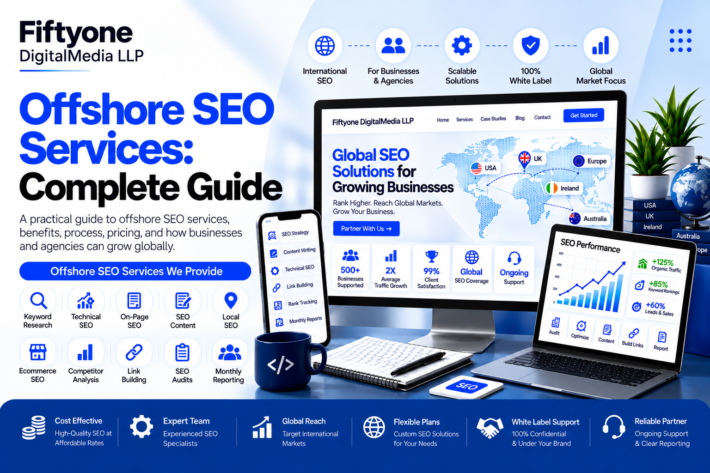
Offshore SEO means outsourcing search engine optimization activities to an SEO team located outside the company’s primary operating market.
The external team can manage individual SEO functions or support the complete campaign. The exact structure depends on the company’s internal resources.
Services can include:
- Technical SEO
- Keyword research
- Competitor analysis
- On-page optimization
- Content optimization
- Internal linking
- International SEO
- Ecommerce SEO
- Link-building support
- SEO reporting
The objective is not simply to reduce costs. A successful offshore SEO model should provide additional expertise, execution capacity, flexibility, and measurable business value.
Why Global Businesses Use Offshore SEO
International SEO creates a larger workload than targeting a single market. Every additional country can introduce new competitors, search behaviours, keyword opportunities, content requirements, and technical considerations.
An offshore team can provide additional resources without requiring the business to recruit every SEO specialist internally.
Key benefits include:
- Access to specialized SEO expertise
- Flexible resource capacity
- Lower recruitment requirements
- Faster campaign execution
- Support across multiple markets
- Reduced operational pressure
- Scalable SEO delivery
- Continuous campaign support
Businesses can also combine internal and offshore resources. The internal team can manage strategic decisions while the external team handles execution-heavy SEO work.
International SEO Requires Market-Specific Research
A global SEO campaign should not simply copy the same keyword list from one country into another. Search terminology, competition, customer intent, and commercial opportunities can differ significantly between markets.
Before optimization begins, the SEO team should understand which countries have the strongest business potential and what customers search for within those markets.
Research should examine:
- Country-specific keywords
- Search intent
- Commercial queries
- Competitor rankings
- Content gaps
- Existing organic visibility
- Landing-page opportunities
- Long-tail searches
This creates a stronger foundation for deciding where SEO resources should be invested.
Benefits of Offshore SEO for Global Businesses
1. Access to Specialized SEO Skills
International SEO requires multiple skill sets. Technical SEO, content optimization, keyword research, competitor analysis, analytics, and authority building involve different areas of expertise.
An offshore SEO team can give businesses access to these capabilities without requiring permanent recruitment for every role.
2. Greater Scalability
SEO workloads can increase quickly when a company launches new services, enters new markets, expands its website, or adds ecommerce categories.
Offshore resources can be scaled according to campaign requirements, making it easier to handle periods of increased workload.
3. Reduced Recruitment Pressure
Recruiting experienced SEO professionals can take considerable time. Businesses also need to manage salaries, onboarding, training, tools, and employee infrastructure.
Offshore SEO reduces dependence on continuous recruitment when additional campaign resources are required.
4. Flexible Operating Costs
Businesses can structure offshore SEO around actual requirements rather than maintaining maximum internal capacity throughout the year.
This can make the cost structure more flexible, particularly for companies with fluctuating workloads.
5. Faster Campaign Execution
An established SEO team can begin working on research, technical optimization, content, and other activities without waiting for a lengthy internal recruitment cycle.
Faster execution can be particularly valuable when businesses are entering competitive markets or launching new digital properties.
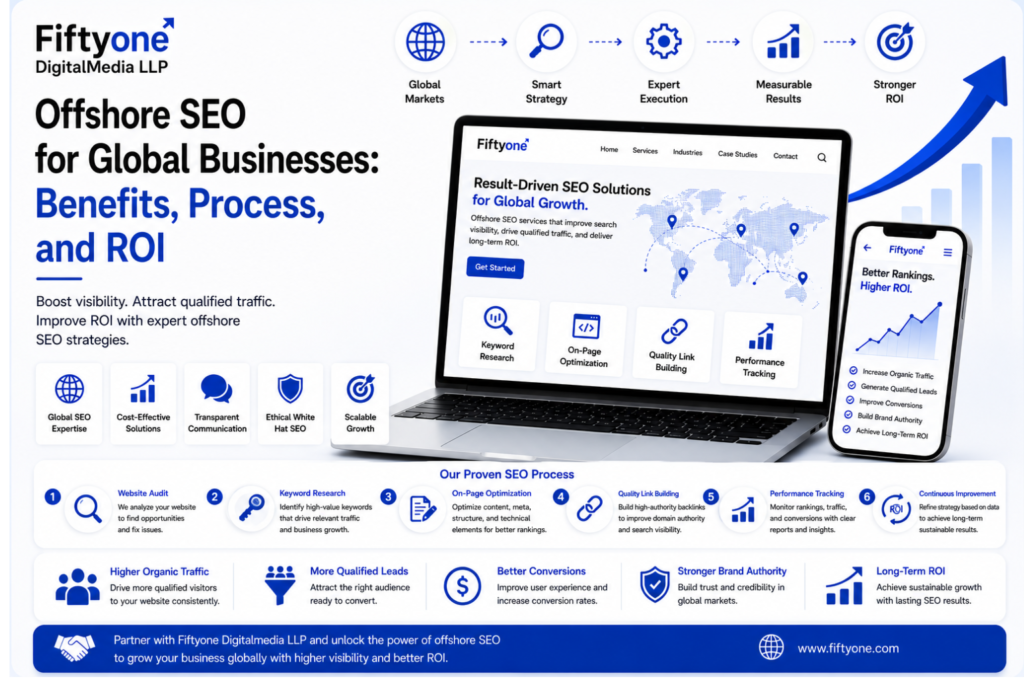
The Offshore SEO Process
A successful offshore SEO campaign needs a defined process. Simply sending a website to an external provider and waiting for rankings creates poor accountability.
Step 1: Business and Market Analysis
The SEO team first needs to understand the company’s products, services, target customers, priority countries, competitors, and commercial objectives.
This prevents SEO recommendations from being disconnected from the actual business.
Step 2: Website and Technical Audit
The website is evaluated for technical issues that can affect crawling, indexing, performance, usability, and organic visibility.
Priority areas can include:
- Indexation
- Crawlability
- Website speed
- Mobile performance
- Canonicals
- Redirects
- Broken pages
- Internal linking
- XML sitemaps
- Structured data
Step 3: Keyword and Competitor Research
The team identifies relevant keywords and analyzes competitors already receiving organic visibility in the target markets.
The focus should be on opportunities that match both search intent and commercial objectives.
Step 4: SEO Strategy
Research findings are converted into an actionable strategy covering technical improvements, content priorities, landing pages, internal linking, authority development, and performance measurement.
Step 5: Implementation
The offshore team executes agreed SEO activities. Depending on the partnership, website implementation may remain with the internal development team or be handled by the SEO provider.
Step 6: Monitoring and Optimization
SEO performance needs continuous monitoring. Rankings, organic traffic, conversions, technical issues, competitor movements, and new keyword opportunities can influence future priorities.
Step 7: Reporting
Reports should explain what was completed, what changed, what performed well, what needs improvement, and what the next priorities are.
Offshore SEO for International Expansion
Businesses entering new countries should avoid spreading SEO resources across too many markets immediately. A better approach is to prioritize markets according to revenue potential, competition, existing visibility, and customer demand.
Companies can begin with selected markets, establish a repeatable SEO process, evaluate performance, and then expand.
Businesses planning international expansion can also read How Offshore SEO Helps Businesses Expand Into International Markets for a related approach to using offshore SEO during global market expansion.
Content Strategy for Global Businesses
International SEO requires content that matches the needs of specific audiences. Publishing large quantities of generic articles does not create sustainable organic visibility.
Content should support commercial pages while addressing relevant questions and search opportunities.
A strong content process evaluates:
- Search intent
- Existing rankings
- Competitor content
- Content gaps
- Commercial relevance
- Topical depth
- Internal linking
- Conversion opportunities
Existing pages should also be reviewed before creating new content. A page already receiving impressions may have stronger optimization potential than an entirely new article.
Technical SEO at International Scale
Technical SEO becomes increasingly important as websites expand. International businesses can have thousands of URLs across products, services, locations, languages, categories, and content sections.
Problems involving duplicate pages, incorrect canonical tags, weak internal linking, poor indexing, or slow performance can affect large portions of a website.
An offshore SEO team should therefore continuously monitor technical health rather than treating technical SEO as a one-time audit.
Measuring Offshore SEO ROI
ROI should be evaluated through business outcomes rather than rankings alone.
A useful offshore SEO ROI analysis should consider:
- SEO investment
- Organic traffic
- Qualified leads
- Organic conversions
- Revenue
- Conversion rate
- Cost per acquisition
- Market-level performance
- Internal resources saved
- Long-term organic growth
A campaign generating high traffic but few qualified leads may have weaker commercial value than a smaller campaign attracting highly relevant customers.
The real objective is to connect SEO investment with measurable business outcomes.
Offshore SEO vs Building an Internal Team
An internal SEO team provides direct control and can be effective when SEO demand is stable and continuous. However, building a complete department requires specialists, salaries, tools, training, management, and infrastructure.
Offshore SEO provides a more flexible alternative when businesses need additional resources without permanently hiring every specialist.
A hybrid model can often be effective. Internal marketing leaders retain control over strategy and business objectives while offshore specialists handle technical and execution-heavy work.
Choosing an Offshore SEO Partner
Selecting an offshore SEO company based only on price is a mistake. Businesses should evaluate the actual capabilities and processes of the provider.
Important criteria include:
- International SEO experience
- Technical expertise
- Keyword research quality
- Content standards
- Link-building practices
- Reporting quality
- Communication
- Scalability
- Confidentiality
- Quality assurance
Businesses should also review sample deliverables and understand exactly what activities are included before committing to a long-term relationship.
For a more detailed evaluation framework, How to Evaluate an Offshore SEO Company Before Signing a Contract can help businesses assess an offshore SEO provider before entering a long-term agreement.
Common Offshore SEO Mistakes
Offshore SEO can fail when businesses treat it as a low-cost activity rather than a strategic marketing function.
Common mistakes include:
- Choosing only on price
- Expecting immediate rankings
- Accepting ranking guarantees
- Using generic international strategies
- Buying low-quality backlinks
- Publishing unreviewed content
- Ignoring technical SEO
- Tracking rankings without conversions
- Poor communication
- Undefined responsibilities
The offshore team should operate with clear objectives and measurable expectations.
Why Work With Fiftyone Digitalmedia LLP
Global businesses need SEO resources capable of supporting changing markets, expanding websites, and increasing competition.
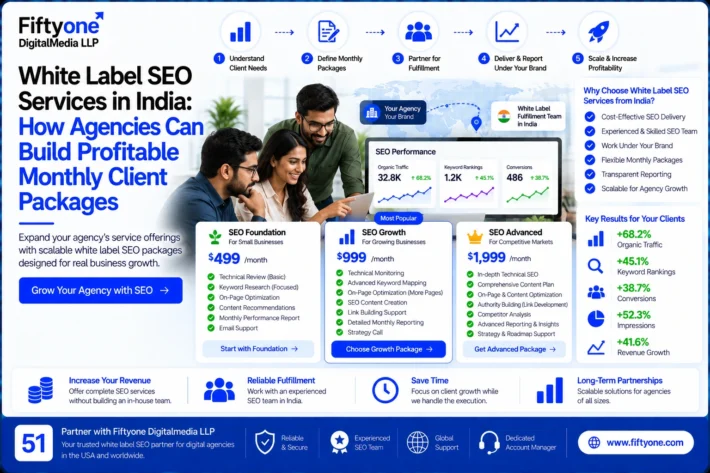
Fiftyone Digitalmedia LLP provides offshore SEO support across technical optimization, keyword research, competitor analysis, content optimization, internal linking, authority development, and performance reporting.
The model allows businesses to increase SEO execution capacity while retaining control over their broader marketing strategy, brand, and commercial objectives.
Frequently Asked Questions
Is offshore SEO suitable for global businesses?
Yes. Offshore SEO can provide scalable resources for companies targeting multiple countries and managing increasingly complex search campaigns.
Can offshore SEO reduce SEO costs?
It can reduce recruitment and operational requirements, but the actual financial benefit depends on campaign scope, provider quality, and internal management costs.
Can an offshore SEO team manage multiple countries?
Yes. However, each market should be researched separately to account for differences in keywords, competitors, search intent, and customer behaviour.
How is offshore SEO ROI measured?
ROI can be evaluated using qualified organic traffic, conversions, leads, revenue, acquisition costs, and improvements in organic visibility.
Should businesses completely outsource SEO?
Not necessarily. A hybrid structure can allow internal teams to retain strategic control while offshore specialists provide additional execution capacity.
Conclusion
Offshore SEO for Global Businesses provides a scalable way to access SEO expertise while reducing the need to build every search marketing capability internally.
The strongest offshore campaigns combine market-specific research, technical SEO, commercially relevant content, competitor analysis, authority development, and continuous performance measurement.
Businesses should evaluate offshore providers based on expertise, transparency, communication, quality, and scalability rather than simply selecting the cheapest option.
When structured correctly, offshore SEO can become a long-term extension of a global company’s marketing operation and contribute to sustainable organic growth across international markets.
Scale Global SEO With a Flexible Team
Fiftyone Digitalmedia LLP helps global businesses strengthen their international search presence through scalable offshore SEO support. From technical optimization and keyword research to content and performance analysis, the focus remains on building relevant organic visibility and measurable business value.