Offshore SEO Agency: Complete Guide
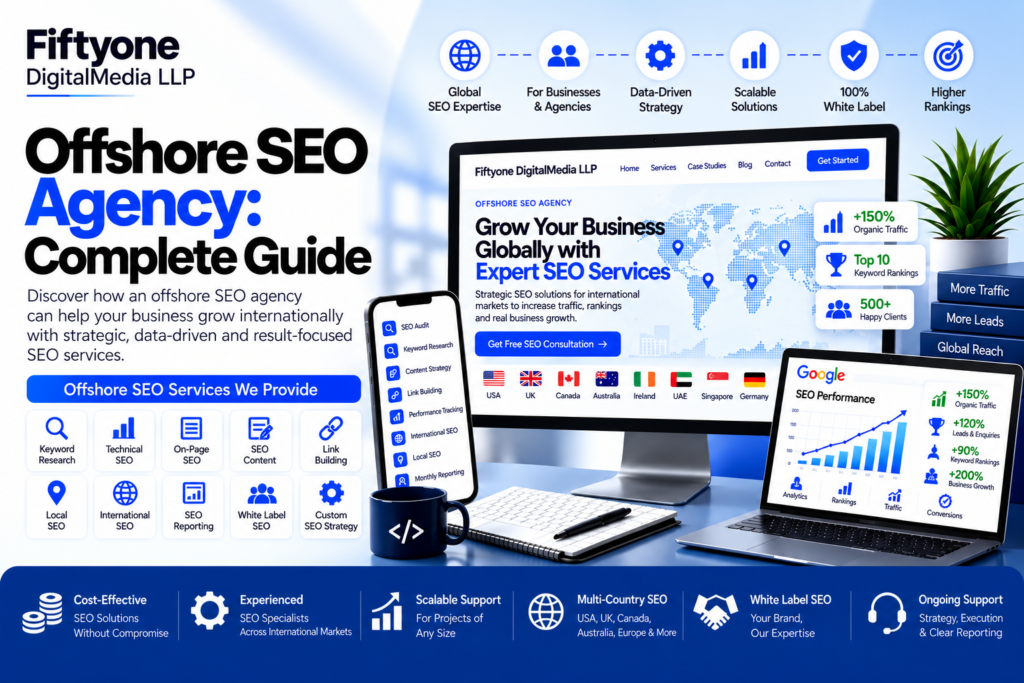
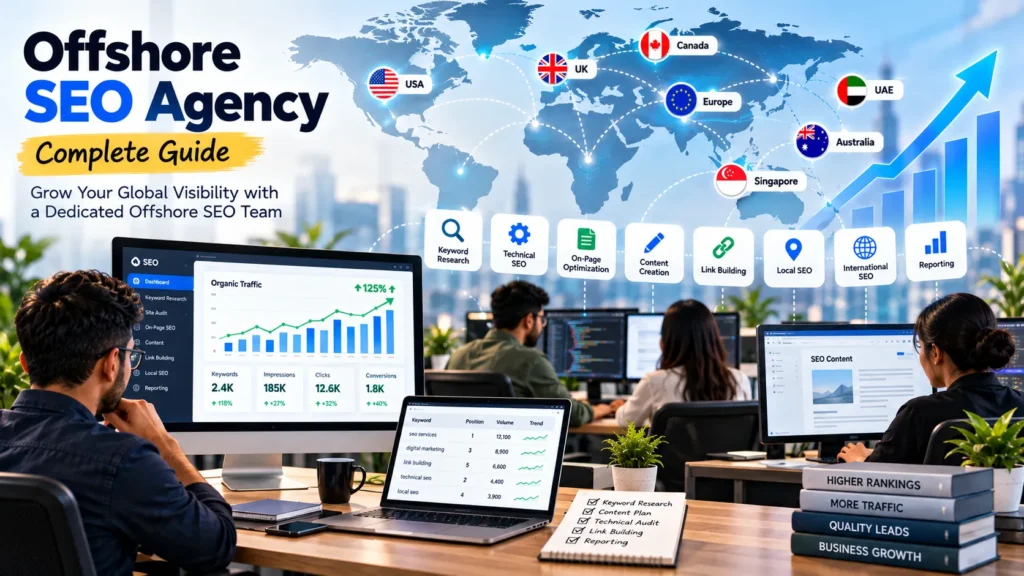
Businesses today can reach customers across multiple countries through search engines. But managing SEO for international markets requires more than publishing blog posts and adding keywords to pages.
Keyword research, technical SEO, content, internal linking, authority building, local search, international targeting, and performance tracking all need to work together.
An offshore SEO agency allows businesses and digital agencies to work with an SEO team located outside their primary market.
Instead of building a complete SEO department internally, a business can outsource some or all of its SEO execution to an external team.
What Is an Offshore SEO Agency?
An offshore SEO agency provides search engine optimization services to businesses from another country.
For example, a company operating in the UK, USA, Canada, Australia, Europe, UAE, Singapore, or another international market may work with an SEO agency located overseas.
The agency can provide services such as:
- Keyword research
- Technical SEO
- On-page optimization
- Content optimization
- SEO content
- Internal linking
- Link building
- Local SEO
- International SEO
- SEO reporting
The exact services depend on the agency and the client’s requirements.
Why Do Businesses Work With Offshore SEO Agencies?
One reason businesses outsource SEO is to access additional expertise without building every SEO role internally.
SEO can involve several areas of specialization. A business may need technical SEO knowledge, content strategy, link-building experience, analytics, and international search expertise.
An offshore agency can provide access to a broader team while the business continues focusing on its core operations.
The model can also be useful when SEO workload changes over time.
Instead of hiring additional employees whenever new SEO requirements appear, businesses can use external resources according to their needs.
Offshore SEO for International Markets
International SEO requires an understanding of how people search in different markets.
A keyword that performs well in one country may not have the same search intent in another.
Businesses targeting multiple countries may need:
- Country-specific keyword research
- Localized content
- Regional landing pages
- International URL structures
- Hreflang implementation
- Local search optimization
- Market-specific content strategies
This is why an offshore SEO partner should understand international SEO rather than simply translating existing content.
What Services Does an Offshore SEO Agency Provide?
Keyword Research
Keyword research identifies the searches relevant to a business, its products, services, and target markets.
For international businesses, research should consider local search behavior rather than simply copying keywords from another country.
Technical SEO
Technical SEO focuses on the website’s ability to be crawled, indexed, understood, and accessed efficiently.
This can include:
- Website architecture
- Indexing
- XML sitemaps
- Canonical URLs
- Redirects
- Mobile usability
- Page speed
- Structured data
- Crawl issues
On-Page SEO
On-page optimization improves the relevance and structure of individual pages.
It can include title tags, headings, content structure, internal links, image optimization, URLs, and search intent alignment.
SEO Content
Content can help businesses target informational, commercial, and transactional searches.
A good content strategy should focus on topics that are genuinely useful to the target audience rather than producing large amounts of repetitive articles.
Link Building
An SEO agency may also support authority-building through relevant link acquisition and outreach.
Quality and relevance should matter more than simply increasing the number of backlinks.
Businesses should ask an offshore SEO agency how it evaluates link opportunities and what type of placements it uses.
Local SEO
Businesses serving specific cities or regions may require local SEO.
This can include business profile optimization, local landing pages, citations, reviews, and location-focused content.
SEO Reporting
Regular reporting helps businesses understand what has been completed and how organic search performance is changing.
Useful reporting can include:
- Organic traffic
- Search impressions
- Clicks
- Rankings
- Conversions
- Technical issues
- Content performance
- Link acquisition
Reports should explain what changed and what actions are planned next rather than simply providing large spreadsheets of keywords.
Offshore SEO vs In-House SEO
An in-house SEO team gives a business direct control over its employees and daily processes.
An offshore SEO agency provides external expertise and delivery capacity.
The difference can be viewed across several areas:
| Factor | Offshore SEO Agency | In-House SEO |
|---|---|---|
| Recruitment | External provider manages its team | Business recruits employees |
| Specialist access | Multiple specialists may be available | Depends on internal team |
| Scalability | Can adjust external support | Requires additional hiring |
| Management | Shared with external provider | Fully internal |
| Tools | Often part of provider workflow | Business manages tools |
| Client/business knowledge | Must be communicated | Develops internally |
| Control | Less direct | More direct |
Neither model works identically for every business.
The right choice depends on SEO workload, internal expertise, business goals, and how much control the company wants over execution.
For agencies comparing these models, White Label SEO vs Hiring an In-House SEO Team: Which Costs More explains the operational differences in more detail.
Offshore SEO vs White Label SEO
These terms are related but not identical.
Offshore SEO describes where the SEO team is located relative to the client.
White label SEO describes how the service is delivered and branded.
An agency can use an offshore SEO provider and offer the service under its own brand. This creates a white label relationship.
For agencies, this model can make it possible to offer SEO services without building a complete SEO fulfillment team internally.
How to Choose an Offshore SEO Agency
Choosing an offshore SEO agency should involve more than comparing service packages.
Look at the company’s experience, communication process, technical capabilities, reporting, SEO methodology, and previous work.
Ask questions such as:
- Which markets have you worked with?
- How do you conduct keyword research?
- What is included in technical SEO?
- How do you approach link building?
- Who creates and reviews content?
- How are results reported?
- Who manages the account?
- How are strategy changes handled?
A transparent agency should be able to explain its process without relying on vague promises.
Check Their Approach to SEO Content
Content quality should be an important part of the selection process.
Avoid choosing an agency simply because it promises to publish a large number of articles every month.
Instead, ask how topics are selected and whether content is based on actual search intent.
A strong content strategy should consider:
- Audience needs
- Search intent
- Keyword relevance
- Existing website content
- Competitor gaps
- Internal linking opportunities
- Business goals
This approach can reduce the risk of publishing many similar pages that compete with each other.
Communication and Time Zones
Working with an offshore team means the business may operate in a different time zone.
This does not automatically create a problem.
A structured communication process can make international collaboration easier.
Define:
- Main communication channel
- Meeting schedule
- Response expectations
- Reporting frequency
- Project management process
- Approval workflow
Clear communication is particularly important when SEO work involves content approvals, technical changes, or multiple stakeholders.
What Should You Avoid?
Businesses should be careful with agencies that promise guaranteed rankings or instant results.
SEO depends on many factors, including competition, website history, content quality, technical implementation, authority, and changes in search algorithms.
Other warning signs include:
- Unclear link-building methods
- No explanation of deliverables
- Generic reports
- Large volumes of low-quality content
- No technical SEO process
- Long-term contracts with unclear terms
- No clear communication structure
A professional SEO relationship should focus on sustainable improvements rather than unrealistic guarantees.
How to Manage an Offshore SEO Partnership
The relationship works better when responsibilities are defined from the beginning.
The business should provide information about its products, services, target markets, competitors, brand guidelines, and business priorities.
The SEO agency should then translate this information into a search strategy.
Regular reviews can help both sides identify what is working, what needs improvement, and which priorities should change.
For agencies looking to outsource SEO fulfillment, How Agencies Can Grow With White Label SEO provides additional context on using external SEO resources as an agency expands.
Offshore SEO for Agencies
Digital agencies often use offshore SEO teams when they have more client demand than their internal team can handle.
The agency can manage sales, client communication, strategy, and account relationships while the external team supports execution.
This can include keyword research, technical audits, content, on-page optimization, link building, and reporting.
For an agency, the key is maintaining quality control before work reaches the client.
Why Fiftyone Digitalmedia LLP?
Fiftyone Digitalmedia LLP provides SEO and digital marketing support for businesses and agencies working with international markets.
SEO support can include keyword research, technical SEO, on-page optimization, content strategy, link-building support, international SEO, and reporting.
The team can also support agencies through white label SEO fulfillment, allowing the agency to maintain its own client relationships and branding.
The approach can be adapted according to the target market, website requirements, competition, and business objectives.
Frequently Asked Questions
What is an offshore SEO agency?
An offshore SEO agency provides search engine optimization services to clients located in another country or market.
Is offshore SEO suitable for international businesses?
Yes. An offshore SEO team can support businesses targeting multiple international markets, provided the team understands local search behavior and international SEO requirements.
What services does an offshore SEO agency provide?
Services can include keyword research, technical SEO, on-page optimization, content, link building, local SEO, international SEO, and reporting.
What is the difference between offshore SEO and white label SEO?
Offshore SEO refers primarily to the location of the service provider, while white label SEO refers to providing SEO services under another company’s brand.
How should I choose an offshore SEO agency?
Review its SEO process, relevant experience, communication, reporting, content quality, technical expertise, link-building approach, and ability to work with your target markets.
Conclusion
An offshore SEO agency can provide businesses and digital agencies with additional SEO expertise without requiring them to build every capability internally.
The right partner should offer more than keyword research and monthly reports. It should understand search intent, technical SEO, content, authority building, international markets, and the business goals behind the campaign.
For companies targeting the USA, UK, Canada, Australia, Europe, New Zealand, UAE, Singapore, and other international markets, the most important consideration is whether the SEO strategy is genuinely adapted to the audience and market being targeted.
A well-structured offshore SEO partnership can provide flexible delivery capacity while allowing businesses to keep their focus on growth, customers, and core operations.