Benefits of Hiring an Offshore Development Team for Growing Agencies

Introduction
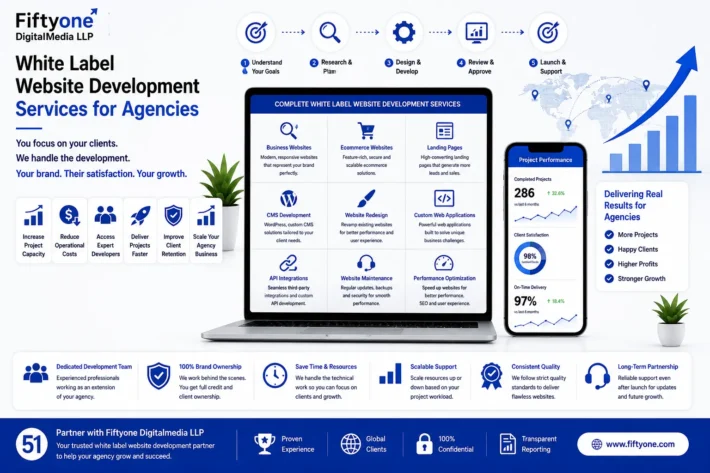
Growing digital agencies often reach a stage where client demand increases faster than their internal development capacity. New website projects, ecommerce requirements, custom integrations, maintenance work, and tight delivery schedules can quickly overload an existing team. Hiring additional full-time developers may appear to be the obvious solution, but recruitment costs, salaries, training, infrastructure, and long-term employment commitments can create unnecessary operational pressure.
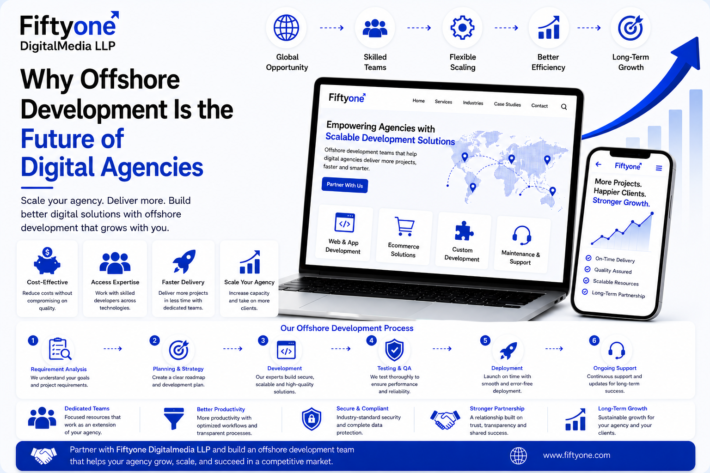
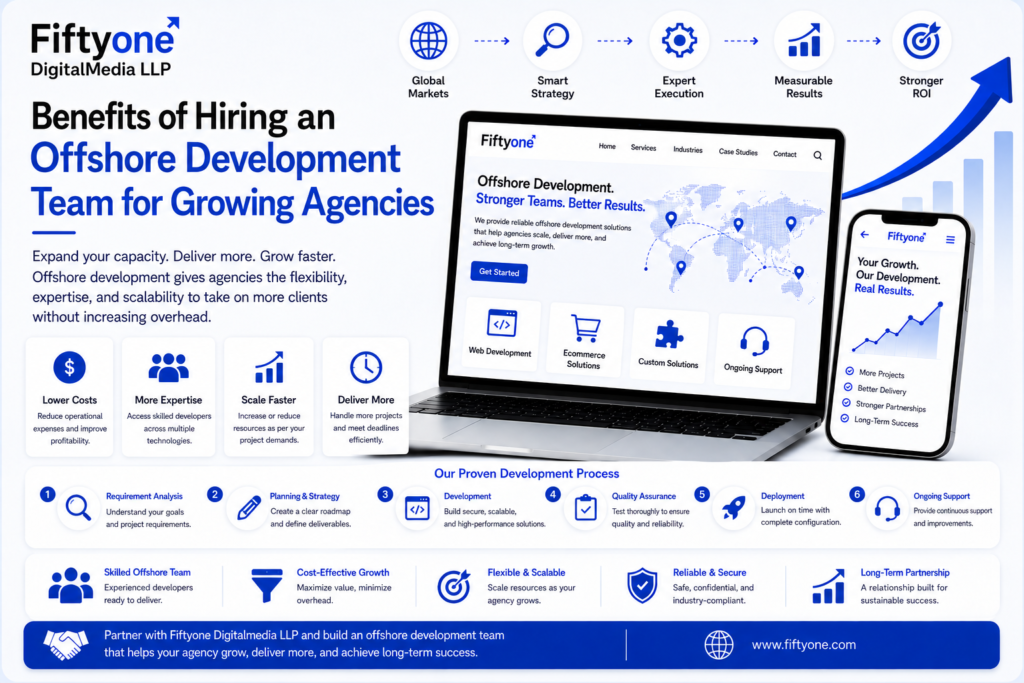
Hiring an offshore development team gives agencies another way to expand technical capacity without building a larger internal department. Agencies can access developers according to project requirements while keeping their internal operations focused on strategy, sales, account management, and client relationships. Fiftyone Digitalmedia LLP provides offshore development support designed to help agencies manage increasing workloads while maintaining consistent project delivery.
Why Growing Agencies Need Flexible Development Capacity
Agency workloads are rarely consistent throughout the year. One month may involve a few maintenance projects, while another can bring multiple website builds, ecommerce stores, redesigns, and custom development requirements simultaneously. Maintaining enough permanent employees to handle peak demand can become expensive when project volumes later decline.
An offshore development model gives agencies greater flexibility. Instead of rejecting projects because internal developers are unavailable, agencies can increase technical resources when workloads rise. This creates a more adaptable delivery structure and allows businesses to pursue growth opportunities without making every increase in project volume dependent on permanent recruitment.
Major Benefits of Hiring an Offshore Development Team
- Lower recruitment and employment costs
- Access to experienced developers
- Flexible development capacity
- Faster project execution
- Reduced pressure on internal teams
- Support across multiple technologies
- Easier management of peak workloads
- Greater ability to accept new projects
- Long-term technical support
- Improved operational scalability
These advantages make offshore development particularly useful for agencies experiencing rapid or unpredictable growth.
Reduce Development and Operational Costs
Cost reduction is one of the strongest reasons agencies consider offshore development, but the financial advantage goes beyond lower developer rates. Building an internal team involves recruitment, salaries, employee benefits, office infrastructure, software subscriptions, equipment, training, and management expenses. These costs remain even when development workloads temporarily decrease.
An offshore model converts part of that fixed operational burden into a more flexible development expense. Agencies can select resources according to actual project requirements instead of maintaining oversized teams throughout the year. This can improve margins while allowing the agency to remain competitive when quoting larger development projects.
For a deeper breakdown of this cost advantage, read How Offshore Development Saves 60% Project Costs. This exact title is present in your published-blog list.
Access Specialized Technical Expertise
Growing agencies frequently encounter projects requiring technologies their existing team does not specialize in. A client may need WordPress customization, WooCommerce functionality, Laravel development, React interfaces, API integrations, custom dashboards, or ongoing technical maintenance.
A capable offshore development team can provide access to specialists across multiple technologies without requiring the agency to recruit separately for every skill.
- WordPress development
- WooCommerce development
- Custom PHP development
- Laravel development
- React development
- Ecommerce development
- API integration
- Front-end development
- Website maintenance
- Performance optimization
This broader technical capability allows agencies to accept more diverse client requirements without continuously changing their internal hiring structure.
Scale Without Expanding the In-House Team
Scaling an agency by hiring employees for every increase in workload creates a rigid cost structure. Recruitment also takes time, and newly hired developers need onboarding before they can work efficiently within existing processes.
Offshore teams provide a more flexible alternative. An agency can begin with limited resources and expand the team as client volume increases. When project requirements change, resources can be adjusted without restructuring the entire internal department.
Fiftyone Digitalmedia LLP works with agencies that require this type of scalable technical support. The objective is to increase development capacity while allowing the agency to retain control over client communication, project strategy, branding, and business relationships.
Improve Project Delivery Speed
Delivery delays directly affect client satisfaction. When internal developers are responsible for too many projects simultaneously, development queues increase and even relatively simple tasks can take longer than necessary.
An offshore development team can distribute the workload across additional resources, allowing multiple development tasks to progress simultaneously. This is particularly useful when an agency is handling several websites or ongoing client accounts at the same time.
Faster delivery does not mean eliminating planning or testing. Agencies still need structured requirements, realistic deadlines, quality assurance, and clear communication. The benefit comes from having sufficient development capacity to execute approved work without unnecessary bottlenecks.
Support Agency Growth Without Losing Client Control
One concern agencies have about outsourcing is losing control over client relationships. That should not happen with a properly structured offshore arrangement. The agency can remain the primary client-facing business while the offshore team handles development behind the scenes.
This model allows agencies to:
- Maintain their own branding
- Control client communication
- Set project pricing
- Manage project strategy
- Review work before client delivery
- Protect client relationships
- Expand technical services
- Increase delivery capacity
For agencies using this structure, the offshore team functions as a technical extension rather than replacing the agency’s role.
Build a More Scalable Agency Model
Sustainable agency growth requires separating revenue growth from uncontrolled increases in fixed operating expenses. If every additional client requires another permanent employee, scaling becomes slower and financially heavier.
Offshore development changes that structure by giving agencies access to external technical capacity when required. It can support larger project volumes, additional service offerings, and more complex client requirements without forcing the business to build every capability internally.
Fiftyone Digitalmedia LLP can support this model through ongoing offshore development resources for agencies that need consistent technical execution across multiple client projects.
Dedicated Offshore Teams vs Project-Based Outsourcing
Growing agencies need to decide whether they require occasional development support or a dedicated offshore team. Project-based outsourcing works when requirements are limited and clearly defined, while dedicated teams are more suitable when an agency manages continuous client work.
A dedicated offshore team becomes familiar with your development standards, preferred technologies, project management system, and quality expectations. This reduces repeated onboarding and makes collaboration more efficient as project volume increases. For agencies expecting consistent growth, the model can provide more predictable development capacity than repeatedly searching for freelancers or temporary resources.
Improve Quality Through a Consistent Development Team
Working with the same offshore developers across multiple projects can improve consistency. Developers gradually understand the agency’s preferred coding practices, website structures, responsive standards, testing requirements, and delivery process.
Quality control should still remain structured rather than depending entirely on individual developers.
- Define coding standards
- Document project requirements
- Establish testing procedures
- Use staging environments
- Review responsive layouts
- Test functionality before delivery
- Maintain version control
- Create clear approval stages
- Track bugs and revisions
A consistent process allows agencies to increase project volume without allowing development standards to decline.
Offshore Development Team vs Freelancers
Freelancers can be useful for small or isolated tasks, but depending on individual freelancers for continuous agency growth creates limitations. Availability can change, technical capabilities vary, and replacing a freelancer often means repeating the onboarding process.
An offshore development team provides a broader resource structure. Agencies can access different technical skills, project coordination, quality assurance, and ongoing support through one development relationship. This becomes increasingly important when several client projects must be delivered simultaneously.
The correct choice depends on workload. Occasional development tasks may not require a dedicated team, but agencies managing recurring website and application projects need a more stable delivery system.
Strengthen Communication and Project Management
Offshore development fails quickly when communication is unstructured. Agencies should establish communication standards before increasing the amount of work assigned to an external team.
Important practices include:
- Define one primary project contact
- Use a centralized task management system
- Set realistic delivery deadlines
- Document requirements clearly
- Schedule progress reviews when necessary
- Define revision and approval procedures
- Establish escalation processes
- Maintain project documentation
Clear communication gives the agency visibility without forcing internal managers to constantly supervise every development task.
Use Offshore Teams to Expand Service Capacity
An offshore development team can allow an agency to offer services that would otherwise require additional internal specialists. Instead of limiting projects to existing capabilities, the agency can use external technical resources to support WordPress, ecommerce, custom development, integrations, maintenance, and other requirements.
This creates an opportunity to increase revenue from existing clients as well as pursue larger projects. Agencies can maintain ownership of strategy and client communication while the offshore team handles technical implementation.
A relevant published resource is Why Offshore WordPress Development Is Growing Among Digital Agencies, which specifically covers offshore WordPress development, agency outsourcing, and development-team support. I verified this exact title in your published-blog list.
How to Choose the Right Offshore Development Team
Do not choose an offshore team only because its hourly rate is lower. A cheap team that requires constant corrections will damage margins rather than improve them. Agencies should evaluate whether the provider can reliably support recurring client work.
Check:
- Relevant technical expertise
- Previous development projects
- Communication quality
- Team availability
- Development workflow
- Quality assurance process
- Security practices
- NDA availability
- Scalability
- Post-launch support
Start with clearly defined requirements and evaluate actual delivery quality before increasing project volume.
When Should an Agency Hire an Offshore Team?
An agency should consider offshore development when its sales capacity starts exceeding its internal delivery capacity. Waiting until developers are completely overloaded creates rushed projects, missed deadlines, and inconsistent quality.
The model becomes particularly relevant when the agency has recurring development work but does not want the fixed cost of continuously expanding an internal department. It can also help agencies test new development services before committing to permanent hiring.
Fiftyone Digitalmedia LLP supports this type of arrangement by providing development resources that can work alongside an agency’s existing processes and technical requirements.
Offshore Development and Long-Term Agency Scalability
Short-term outsourcing solves temporary resource problems. A properly managed offshore partnership can solve a larger operational problem by giving agencies a development capacity that can expand alongside client demand.
This structure allows internal employees to concentrate on areas where direct agency involvement matters most, including strategy, sales, account management, creative direction, and customer relationships. Technical execution can then be distributed across a larger development resource base.
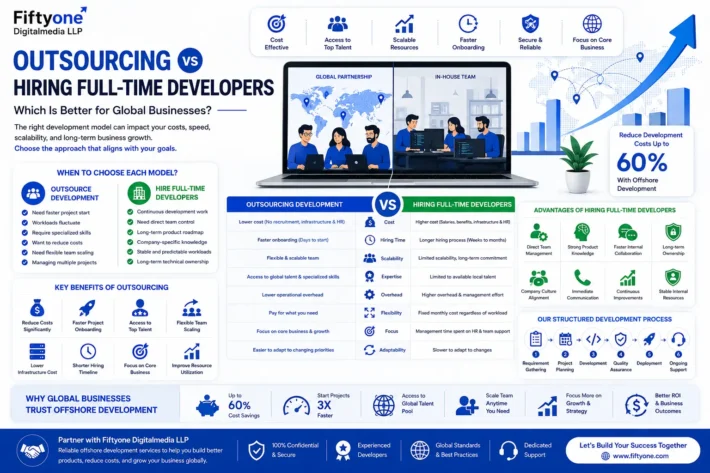
For agencies comparing outsourcing against permanent recruitment, Outsourcing vs Hiring Full-Time Developers is another relevant published article. The exact title appears in your provided blog list.
Why Growing Agencies Work With Fiftyone Digitalmedia LLP
Agency growth creates a delivery problem if technical capacity cannot increase at the same rate as sales. Fiftyone Digitalmedia LLP provides offshore development support for agencies that need additional technical resources without continuously increasing permanent internal staffing.
The partnership can support website development, ecommerce projects, custom functionality, integrations, maintenance, and other recurring development requirements. The objective is to give agencies a scalable technical delivery structure while they retain control over branding, pricing, strategy, and client relationships.
For growing agencies, this approach can create a more flexible operational model than depending entirely on either permanent recruitment or disconnected freelancers.
Frequently Asked Questions
What is an offshore development team?
An offshore development team consists of developers located in another country who provide technical services remotely. The team may handle complete projects or work alongside an agency’s existing developers.
How can offshore development help a growing agency?
It can increase development capacity, provide access to specialized skills, reduce recruitment requirements, and help agencies manage larger project volumes.
Is an offshore development team better than freelancers?
For recurring and larger workloads, a structured offshore team generally provides greater resource continuity and broader technical capabilities. Freelancers may still be suitable for isolated tasks.
Can agencies maintain control over clients?
Yes. Agencies can remain responsible for sales, communication, strategy, pricing, and client management while the offshore team handles technical delivery.
What should agencies check before hiring an offshore team?
Evaluate technical experience, communication, development processes, security, testing, scalability, project management, and ongoing support before making a long-term commitment.
Conclusion
Hiring an offshore development team can give growing agencies access to the technical capacity required to accept more projects without making every stage of growth dependent on permanent recruitment. The strongest benefits come from flexible scaling, broader technical expertise, controlled operating costs, faster project execution, and consistent development support.
The model still requires proper management. Agencies need documented requirements, quality standards, clear communication, and a reliable development partner. When those systems are in place, offshore development can become part of the agency’s long-term delivery infrastructure rather than simply a short-term cost-saving tactic.
Scale Your Development Capacity
Fiftyone Digitalmedia LLP works with agencies that require scalable offshore development resources for recurring client projects. A structured offshore partnership can help increase delivery capacity while allowing the agency to remain focused on client acquisition, strategy, and business growth.